A 3×3 garden may seem small, but it can produce an impressive amount of fresh vegetables, herbs, flowers, or even fruits when planned correctly. Whether you’re working with a tiny backyard, a patio, or a raised garden bed, a 3×3-foot garden is one of the most efficient ways to grow healthy plants without needing a large space.
The secret isn’t the size of the garden—it’s how you use it. By choosing the right plants, spacing them properly, and following a few simple gardening techniques, you can harvest fresh produce throughout the growing season.
In this guide, you’ll learn everything you need to know about creating a productive 3×3 garden, from planning and soil preparation to plant selection and maintenance.
Why Choose a 3×3 Garden?
A 3×3 garden measures 3 feet by 3 feet, giving you 9 square feet of growing space. Although compact, it offers enough room to grow multiple crops using square-foot gardening principles.
Benefits include:
- Perfect for beginners
- Requires less watering
- Easier weed control
- Lower maintenance
- Fits almost anywhere
- Great for raised beds
- Budget-friendly
- Produces surprisingly high yields
Because every square foot is planned carefully, you waste very little space.
What Can You Grow in a 3×3 Garden?
One of the biggest advantages of a small garden is flexibility. Depending on your climate, you can grow vegetables, herbs, flowers, or even dwarf varieties of fruit.
Popular choices include:
Vegetables
- Lettuce
- Spinach
- Kale
- Radishes
- Carrots
- Beets
- Bush beans
- Peppers
- Tomatoes
- Cucumbers (with vertical support)
Herbs
- Basil
- Parsley
- Cilantro
- Chives
- Oregano
- Thyme
- Mint (best in its own container)
Flowers
- Marigolds
- Nasturtiums
- Calendula
- Zinnias
- Alyssum
Flowers help attract pollinators while discouraging certain pests.
Best Layout for a 3×3 Garden
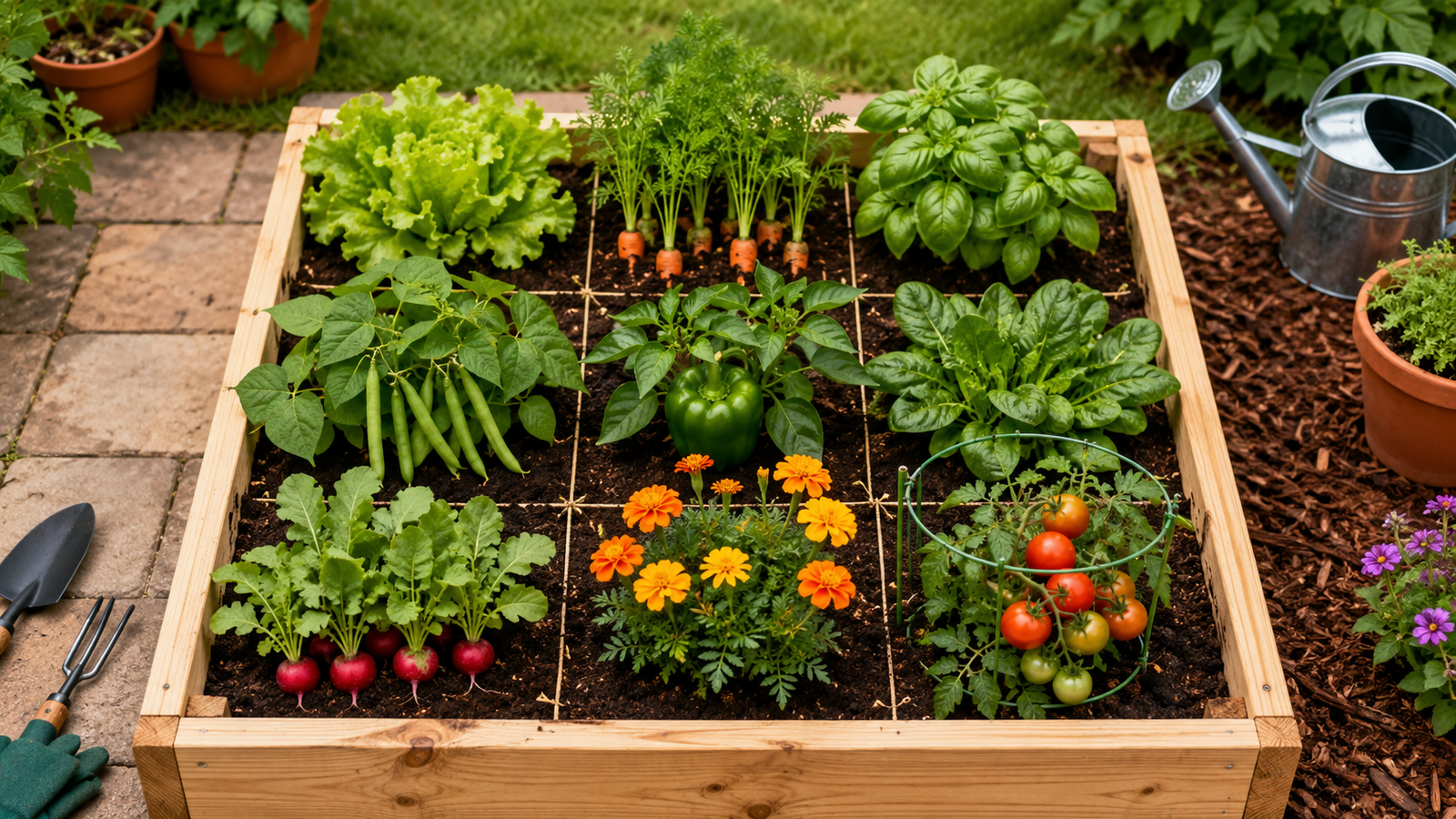
Most gardeners divide the bed into nine 1×1-foot squares. Each square holds a different crop based on its spacing requirements.
Example Layout
| Square | Plant |
|---|---|
| 1 | Lettuce |
| 2 | Carrots |
| 3 | Basil |
| 4 | Bush Beans |
| 5 | Pepper Plant |
| 6 | Spinach |
| 7 | Radishes |
| 8 | Marigolds |
| 9 | Cherry Tomato (with cage) |
This layout provides a balanced mix of vegetables, herbs, and flowers.
Planning Your 3×3 Garden
Before planting, consider a few important factors.
1. Choose a Sunny Location
Most vegetables require:
- 6–8 hours of direct sunlight
- Good air circulation
- Easy access to water
Avoid placing the garden near large trees that compete for moisture.
2. Use Quality Soil
Healthy soil produces healthy plants.
A good soil mix should include:
- Compost
- Peat moss or coco coir
- Vermiculite or perlite
- Organic fertilizer
Loose soil allows roots to grow easily.
3. Build a Raised Bed (Optional)
Raised beds improve:
- Drainage
- Soil quality
- Root growth
- Weed control
A raised 3×3 garden can be built using untreated cedar or other rot-resistant wood.
Square Foot Gardening in a 3×3 Garden
Square-foot gardening is one of the most effective methods for maximizing small spaces.
Instead of planting in rows, every square foot contains a specific number of plants.
Here are common spacing recommendations:
| Plant | Plants Per Square Foot |
|---|---|
| Tomato | 1 |
| Pepper | 1 |
| Broccoli | 1 |
| Lettuce | 4 |
| Swiss Chard | 4 |
| Spinach | 9 |
| Bush Beans | 9 |
| Beets | 9 |
| Carrots | 16 |
| Radishes | 16 |
| Onions | 16 |
This system helps prevent overcrowding while maximizing production.
Best Vegetables for Beginners
If you’re new to gardening, start with easy-to-grow crops.
Great beginner plants include:
- Lettuce
- Radishes
- Bush beans
- Spinach
- Kale
- Cherry tomatoes
- Basil
- Green onions
These crops germinate quickly and require relatively little care.
Companion Planting Tips
Companion planting allows certain plants to support one another.
Good combinations include:
- Tomatoes + Basil
- Carrots + Onions
- Lettuce + Radishes
- Peppers + Marigolds
- Beans + Herbs
Benefits include:
- Better growth
- Fewer pests
- Improved pollination
- Healthier soil
Avoid planting crops that compete heavily for nutrients in the same square.
Watering Your 3×3 Garden
Small gardens dry out faster than large ones.
General watering guidelines:
- Water deeply instead of lightly.
- Water early in the morning.
- Keep soil evenly moist.
- Avoid wetting leaves whenever possible.
- Add mulch to reduce evaporation.
During hot weather, watering may be needed every day.
Fertilizing for Better Harvests
Plants gradually use nutrients from the soil.
Feed your garden using:
- Compost
- Worm castings
- Fish emulsion
- Organic vegetable fertilizer
Heavy feeders like tomatoes and peppers benefit from extra feeding during the growing season.
Vertical Gardening for More Space
One smart way to increase production is growing upward.
Good vertical crops include:
- Cucumbers
- Pole beans
- Peas
- Small squash
- Cherry tomatoes
Use:
- Trellises
- Garden cages
- Bamboo stakes
- String supports
Vertical gardening improves airflow while freeing valuable ground space.
Seasonal Planting Ideas
Different crops thrive in different seasons.
Spring
- Spinach
- Lettuce
- Peas
- Carrots
- Radishes
Summer
- Tomatoes
- Peppers
- Cucumbers
- Basil
- Beans
Fall
- Kale
- Beets
- Swiss chard
- Broccoli
- Garlic
Rotating crops each season helps maintain healthier soil.
Common Mistakes to Avoid
Many beginner gardeners make simple mistakes that reduce harvests.
Avoid these:
- Overwatering
- Planting too closely
- Ignoring sunlight needs
- Poor soil preparation
- Skipping mulch
- Forgetting succession planting
- Not harvesting on time
Regular observation helps catch problems before they become serious.
Pest Control Naturally
Instead of using harsh chemicals, try natural methods.
Helpful solutions include:
- Neem oil
- Hand-picking insects
- Companion flowers
- Insect netting
- Healthy soil practices
Ladybugs and lacewings are beneficial insects that naturally control aphids.
How Much Food Can a 3×3 Garden Produce?
A well-maintained 3×3 garden can provide a surprising amount of fresh produce.
Depending on the crops you choose, one season may produce:
- Several pounds of tomatoes
- Multiple harvests of lettuce
- Fresh herbs all summer
- Weekly beans
- Continuous spinach
- Dozens of carrots
- Plenty of radishes
Success depends on climate, soil quality, sunlight, and proper maintenance.
Tips for Maximizing Every Square Foot
To get the most from your garden:
- Plant successively after harvesting fast-growing crops.
- Use vertical supports.
- Mix vegetables with herbs.
- Add flowers for pollinators.
- Harvest regularly.
- Keep weeds under control.
- Refresh soil with compost every season.
- Rotate crops yearly.
These small habits can significantly increase yields.
Frequently Asked Questions
Is a 3×3 garden large enough for vegetables?
Yes. A 3×3 garden provides enough room to grow a variety of vegetables, herbs, and flowers. With proper planning and square-foot gardening techniques, you can enjoy a productive harvest throughout the season.
How many tomato plants fit in a 3×3 garden?
Generally, one cherry or compact tomato plant is ideal for a 3×3 garden. It should be supported with a cage or stake to save space and improve airflow.
Can I grow herbs and vegetables together?
Absolutely. Herbs like basil, parsley, thyme, and chives grow well alongside vegetables and may even help repel certain pests.
How often should I water a 3×3 garden?
Water when the top inch of soil feels dry. During warm weather, this may mean watering daily or every other day, depending on rainfall and soil type.
What is the best soil for a 3×3 garden?
A nutrient-rich mix containing compost, peat moss or coco coir, and perlite or vermiculite provides excellent drainage while retaining enough moisture for healthy plant growth.
Can beginners successfully manage a 3×3 garden?
Yes. A 3×3 garden is one of the easiest gardening projects for beginners because it’s affordable, manageable, and simple to maintain while still producing a rewarding harvest.
Final Thoughts
A 3×3 garden proves that you don’t need a large yard to grow fresh, healthy food. With thoughtful planning, fertile soil, proper spacing, and consistent care, even nine square feet can become a highly productive growing space.
Whether you want fresh salads, flavorful herbs, colorful flowers, or homegrown vegetables, this compact garden offers an excellent starting point for gardeners of all experience levels. Start small, learn as you grow, and enjoy the satisfaction of harvesting food from your own backyard.
Also Read: Epoxy Garage Floor Cost: Complete Pricing Guide for 2026

One thought on “3×3 Garden: The Complete Beginner’s Guide to Planning, Planting, and Maximizing a Small Garden”