Designing a beautiful garden is about more than planting flowers and arranging a few pots. A well-planned garden can transform an ordinary outdoor space into a peaceful retreat, a productive vegetable-growing area, or a welcoming place for family gatherings.
If you’re searching for how to design a garden layout kdagardenation, you’re probably looking for practical ways to organize your outdoor space while making it attractive, comfortable, and easy to maintain.
The good news is that creating a successful garden layout doesn’t require professional landscaping experience. With thoughtful planning, suitable plants, and a little creativity, almost anyone can design a garden that looks beautiful throughout the seasons.
This guide explores everything from measuring your outdoor space and choosing plants to creating pathways, organizing garden beds, and avoiding common landscaping mistakes.
Understanding the Basics of Garden Layout Design
A garden layout is the arrangement of plants, pathways, garden beds, seating areas, and decorative features within an outdoor space.
The purpose of a good layout is to create a balance between appearance and functionality.
For example, a garden filled with colorful flowers might look attractive, but without proper walking paths or sufficient sunlight, maintaining those plants could become difficult.
A successful garden design considers several important elements:
- Available outdoor space
- Sunlight and shade patterns
- Soil quality and drainage
- Plant growth requirements
- Walking paths and accessibility
- Water availability
- Seasonal changes
- Maintenance requirements
Understanding these factors before planting helps prevent unnecessary expenses and makes your garden easier to manage.
Whether you’re planning a small backyard or a large outdoor landscape, the same basic principles apply.
Step 1: Measure and Evaluate Your Garden Space
The first step in learning how to design a garden layout kdagardenation is understanding the space you’re working with.
Before purchasing plants or landscaping materials, take accurate measurements of your garden.
Measure the length and width of the available area and identify existing features such as trees, fences, walls, and outdoor structures.
A simple sketch on graph paper can help you visualize the available space.
Observe Sunlight Throughout the Day
Sunlight is one of the most important factors affecting plant growth.
Some plants require direct sunlight for most of the day, while others prefer partial shade.
Observe your garden in the morning, afternoon, and evening to understand how sunlight moves across the area.
As a general guide:
| Garden Condition | Sunlight Exposure | Suitable Plants |
|---|---|---|
| Full sun | 6 or more hours daily | Tomatoes, roses, lavender |
| Partial sun | Approximately 4–6 hours | Many flowering perennials, lettuce |
| Partial shade | Approximately 2–4 hours of direct sun | Hostas, some ferns |
| Full shade | Less than 2 hours of direct sun | Shade-tolerant ferns, certain ground covers |
| Mixed sunlight | Exposure varies by location | Combination of sun- and shade-loving plants |
These categories are general guidelines. Individual plant varieties may have different requirements, and local temperatures can affect their performance.
Examine Soil and Drainage
Healthy soil supports strong roots and better plant growth.
Check whether your garden soil is sandy, clay-heavy, or loamy.
You should also observe how quickly water drains after rainfall.
If water remains on the surface for long periods, you may need to improve drainage or consider raised garden beds.
A soil test can help determine pH and nutrient levels before you add fertilizers or amendments.
Step 2: Decide What You Want From Your Garden
Every successful garden starts with a clear purpose.
Some homeowners want a relaxing outdoor environment, while others prefer growing vegetables, herbs, or flowers.
Before designing your layout, think about how you intend to use the space.
Popular garden purposes include:
- Flower garden: Creates colorful displays and attracts pollinators.
- Vegetable garden: Provides space for growing fresh produce.
- Herb garden: Offers convenient access to culinary herbs.
- Relaxation garden: Includes seating, shade, and decorative plants.
- Family garden: Provides open space for outdoor activities.
- Wildlife garden: Supports birds, butterflies, bees, and other beneficial wildlife.
You can also combine multiple purposes within one layout.
For example, a backyard might feature vegetable beds along one side, flowering borders near the fence, and a small seating area in the center.
The key is deciding which features matter most before dividing the available space.
Step 3: Choose the Right Garden Layout Style
Choosing a suitable layout style can make your outdoor space feel organized and visually appealing.
Different garden styles work better for different property sizes, climates, and personal preferences.
Formal Garden Layout
Formal gardens feature symmetrical designs, straight pathways, and carefully arranged plants.
They often include:
- Geometric garden beds
- Matching plant arrangements
- Neatly trimmed hedges
- Straight walking paths
- Central decorative features
This style works particularly well for homeowners who prefer a clean, structured appearance.
However, maintaining perfectly shaped hedges and borders may require regular trimming.
Informal Garden Layout
Informal gardens use natural shapes, curved pathways, and relaxed planting arrangements.
Plants are often grouped to create a softer, more organic appearance.
This style is suitable for people who enjoy a natural-looking landscape without strict symmetry.
It can also provide opportunities to incorporate native plants and wildlife-friendly features.
Modern Garden Layout
Modern garden designs focus on simplicity, clean lines, and carefully selected materials.
Common features include:
- Minimalist planting beds
- Decorative gravel
- Concrete or stone pathways
- Raised planters
- Outdoor seating
- Simple lighting arrangements
A modern layout can work especially well in smaller urban backyards.
Cottage Garden Layout
Cottage gardens combine flowers, herbs, shrubs, and climbing plants in colorful arrangements.
Rather than following strict geometric patterns, these gardens create a lush and welcoming atmosphere.
They are ideal for gardeners who enjoy seasonal flowers and a more traditional outdoor appearance.
Step 4: Divide Your Garden Into Functional Zones
One of the most effective garden design techniques is dividing the available space into different functional areas.
This approach helps prevent overcrowding and makes the garden easier to navigate.
For example, you might create separate zones for planting, relaxing, and walking.
A simple backyard layout could include:
| Garden Zone | Suggested Space Allocation | Main Purpose |
|---|---|---|
| Flower beds | 25% | Decoration and pollinator support |
| Vegetable garden | 25% | Growing fresh produce |
| Seating area | 20% | Relaxation and entertaining |
| Lawn or open space | 20% | Recreation and visual balance |
| Pathways | 10% | Access and movement |
These percentages are only an example, not fixed design rules.
A family with children may prefer more open lawn space, while someone interested in vegetable gardening might dedicate most of the yard to planting beds.
The best layout is one that matches your lifestyle and gardening priorities.
Step 5: Plan Garden Beds and Plant Placement
Plant placement plays a major role in how your garden looks and performs.
When arranging plants, consider their mature height, width, root development, and sunlight requirements.
A small shrub may look perfectly positioned when first planted but could eventually grow large enough to block a pathway.
Always check the expected mature size of each plant before deciding where it belongs.
Arrange Plants According to Height
A common planting technique involves placing taller plants toward the back of garden borders and shorter plants near the front.
For example:
- Tall ornamental grasses or shrubs at the back
- Medium-height flowering plants in the middle
- Low-growing flowers and ground covers at the front
This arrangement creates visual depth while allowing smaller plants to remain visible.
For garden beds that can be viewed from all sides, taller plants can be positioned near the center.
Group Plants With Similar Needs
Plants with similar watering and sunlight requirements should generally be grouped together.
For example, drought-tolerant plants may struggle if planted beside species requiring consistently moist soil.
Grouping compatible plants makes watering more efficient and simplifies ongoing maintenance.
Step 6: Create Comfortable Garden Pathways
Pathways connect different sections of your garden and make everyday maintenance easier.
Without clearly planned paths, gardeners may accidentally step on plants or compact the soil around their roots.
Garden pathways can be constructed using various materials, including:
- Natural stone
- Gravel
- Brick
- Concrete pavers
- Stepping stones
- Wood chips
Choose materials based on your budget, garden style, drainage needs, and accessibility requirements.
For frequently used walking paths, a width of approximately 3–4 feet can provide comfortable access for one person carrying gardening tools.
Wider paths may be necessary where people need to pass each other or where wheelchair accessibility is important.
Avoid placing sharp turns or narrow passages near large shrubs.
A well-designed pathway should feel natural and connect the most frequently used garden areas.
Step 7: Select Plants Suitable for Your Climate
Choosing plants based on appearance alone is one of the most common gardening mistakes.
A beautiful flowering plant may perform poorly if it cannot tolerate your local temperatures, rainfall, or soil conditions.
Before purchasing plants, research their climate requirements.
Consider:
- Average summer temperatures
- Winter minimum temperatures
- Annual rainfall
- Humidity levels
- Seasonal sunlight changes
- Soil characteristics
Native and locally adapted plants are often good choices because they are suited to regional growing conditions.
However, even native plants need suitable placement and proper care during establishment.
Include a Mix of Plant Types
A visually interesting garden usually contains several types of plants.
You might combine flowering perennials, evergreen shrubs, ornamental grasses, and seasonal flowers.
This approach adds variety in height, texture, and color.
For year-round interest, consider plants that flower during different seasons rather than selecting varieties that bloom at the same time.
Step 8: Design an Efficient Watering System
Watering is essential for maintaining healthy plants, but poor irrigation planning can waste water and damage your garden.
When designing your layout, consider how water will reach each planting area.
For larger gardens, installing irrigation infrastructure before planting can save time and effort.
Drip Irrigation
Drip irrigation delivers water near plant roots through tubes and emitters.
It is particularly useful for vegetable beds, shrubs, and organized planting areas.
Because water is applied close to the soil, it can reduce unnecessary evaporation compared with poorly positioned overhead watering systems.
Soaker Hoses
Soaker hoses release water slowly along their length.
They are convenient for flower beds, vegetable rows, and narrow planting areas.
Manual Watering
For smaller gardens, a watering can or hose may be sufficient.
However, plants should be watered according to their individual needs rather than following an identical schedule for every species.
Adding mulch around plants can also help conserve soil moisture and reduce weed growth.
Step 9: Add Attractive Garden Features
Once the main planting areas and pathways are planned, consider adding decorative features.
These elements can make your garden feel more inviting and personalized.
Popular garden features include:
- Wooden benches
- Small fountains
- Decorative planters
- Pergolas
- Garden sculptures
- Birdbaths
- Solar pathway lights
- Climbing plant supports
Avoid adding too many features to a small garden.
An overcrowded layout can make the outdoor space appear smaller and more difficult to maintain.
Instead, choose one or two focal points that complement the surrounding plants.
For example, a simple wooden bench surrounded by flowering shrubs can create an attractive relaxation area.
Step 10: Use Smart Design Techniques for Small Gardens
Limited outdoor space doesn’t mean you have to sacrifice beauty or functionality.
Small gardens can be highly productive and visually appealing when every area is used thoughtfully.
Try Vertical Gardening
Vertical gardening allows plants to grow upward instead of spreading across the ground.
You can use:
- Wall-mounted planters
- Hanging baskets
- Trellises
- Vertical herb containers
- Climbing vegetable supports
This technique works particularly well for balconies, patios, and narrow backyards.
Choose Multi-Purpose Features
In smaller gardens, select features that serve more than one purpose.
For example, a raised planter with a wide, sturdy edge may provide additional seating if it is specifically designed to support that use.
Similarly, a pergola can provide shade while supporting suitable climbing plants.
Keep the Design Simple
Using too many different materials, colors, and plant varieties can make a small garden feel visually cluttered.
Repeating a few complementary plants throughout the space often creates a more organized appearance.
Step 11: Create a Garden Layout Plan Before Planting
If you’re learning how to design a garden layout kdagardenation, creating a simple plan before purchasing materials is one of the most useful steps.
You don’t need expensive landscape design software.
A pencil, ruler, and graph paper can be enough to develop a practical layout.
Start by drawing the boundaries of your outdoor space.
Next, mark permanent features such as:
- House walls
- Fences
- Existing trees
- Gates
- Water connections
- Drainage areas
Then identify the sunniest and shadiest sections.
Place your main functional zones on the sketch and connect them with pathways.
Finally, mark the approximate positions of garden beds, shrubs, seating areas, and decorative features.
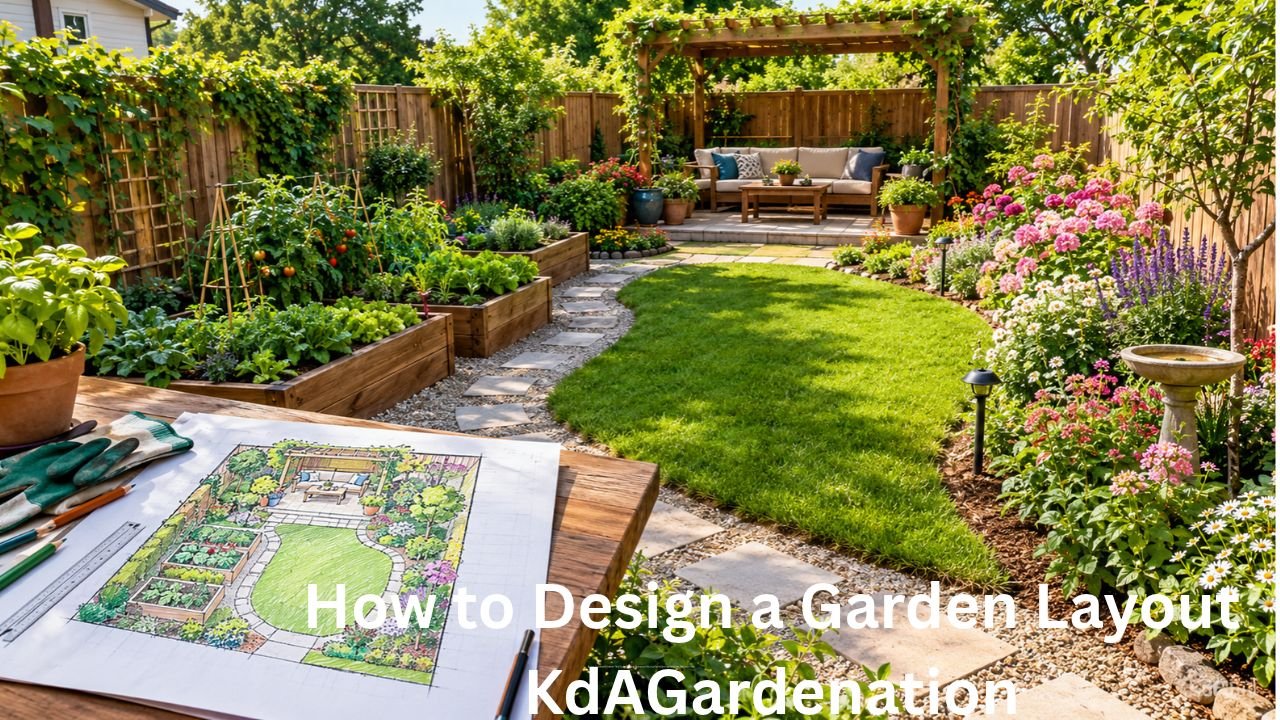
Example Layout for a 20 × 30-Foot Backyard
Imagine you have a rectangular backyard measuring 20 feet wide and 30 feet long.
You could organize it in the following way:
Back section: A seating area with a small pergola and decorative plants.
Left side: Raised vegetable beds positioned where they receive sufficient sunlight.
Right side: Flower borders with a mixture of shrubs and seasonal blooms.
Center: A compact open area or lawn.
Connecting areas: A pathway linking the entrance, seating area, and planting beds.
This layout provides a combination of beauty, functionality, and accessibility.
Adjust the arrangement based on the actual sunlight, drainage, and access points in your yard.
Common Mistakes to Avoid When Designing a Garden
Even experienced gardeners sometimes make layout mistakes.
Fortunately, many problems can be avoided with careful planning.
Planting Too Close Together
Young plants may appear small, but many species spread considerably as they mature.
Crowded planting can reduce airflow, increase competition for resources, and make maintenance more difficult.
Always follow appropriate spacing recommendations.
Ignoring Sunlight Requirements
Placing sun-loving plants in heavily shaded locations may result in weak growth and poor flowering.
Similarly, some shade-loving plants can suffer leaf damage when exposed to intense afternoon sunlight.
Match plants to the conditions in each garden zone.
Forgetting About Maintenance Access
Every garden needs occasional weeding, pruning, watering, and soil care.
Make sure you can comfortably reach planting beds without stepping on the soil.
For raised beds accessible from both sides, a width of approximately 4 feet is a common practical maximum, although individual reach and accessibility needs vary.
Overlooking Drainage
Poor drainage can cause waterlogging and damage plant roots.
Identify low-lying areas before finalizing the layout.
Depending on the conditions, solutions may include improving soil structure, redirecting surface water safely, or installing appropriate drainage systems.
Choosing Too Many Plants
Buying every attractive plant at the garden center can lead to a crowded and inconsistent design.
Instead, begin with a manageable selection of plants that share similar growing requirements.
You can always expand your collection later.
How to Make Your Garden Look Beautiful Throughout the Year
A garden shouldn’t look attractive during only one season.
With thoughtful plant selection, you can create visual interest throughout much of the year.
Spring-flowering plants can provide early color, while summer bloomers keep the landscape lively during warmer months.
Autumn foliage, ornamental grasses, and evergreen shrubs can provide additional seasonal interest.
Consider the following strategies:
- Include evergreen plants for year-round structure.
- Choose flowering plants with different blooming periods.
- Add shrubs with attractive foliage.
- Use ornamental grasses for texture and movement.
- Incorporate seasonal containers for flexible color.
- Select plants that suit your local growing climate.
In warmer regions, heat-tolerant plants and shaded seating areas may be especially important.
In colder climates, evergreen shrubs and plants with interesting winter structure can help maintain visual appeal.
Budget-Friendly Garden Layout Ideas
Creating an attractive garden doesn’t necessarily require a large budget.
Many successful garden designs begin with simple materials and gradually develop over time.
One effective strategy is to complete the project in stages.
Start with essential elements such as soil preparation, drainage improvements, and main pathways.
Next, establish larger shrubs and permanent planting beds.
Decorative accessories can be added later.
Other ways to reduce expenses include:
- Growing suitable plants from seeds
- Dividing established perennials
- Reusing existing containers
- Choosing locally available materials
- Using mulch to reduce weed maintenance
- Starting with a smaller planting area
- Selecting durable plants suited to local conditions
Prioritize long-term plant health over expensive decorative features.
A simple garden with healthy plants often looks more appealing than an elaborate landscape that is difficult to maintain.
Maintaining Your Garden After Designing the Layout
A thoughtful layout makes gardening easier, but regular maintenance is still necessary.
The amount of work depends on the plants you choose and the complexity of your design.
A basic maintenance routine may include:
Weekly: Check soil moisture, remove visible weeds, and inspect plants for pests or disease.
Monthly: Review plant growth, trim where appropriate, and check irrigation equipment.
Seasonally: Replace seasonal plants, refresh mulch when needed, and adjust watering schedules.
Annually: Evaluate the overall layout and identify areas that could benefit from improvement.
Remember that gardens naturally change over time.
Trees grow taller, shrubs spread, and sunlight patterns shift.
Your original layout should allow enough flexibility to accommodate these changes.
Frequently Asked Questions (FAQs)
1. What is the easiest way to design a garden layout for beginners?
The easiest method is to measure your outdoor space, observe sunlight conditions, and draw a simple garden plan on paper. Divide the space into functional areas, choose suitable plants, and create accessible pathways before planting.
Start with a small, manageable design and expand as you gain experience.
2. How do I design a garden layout for a small backyard?
For a small backyard, prioritize essential features and avoid overcrowding. Use vertical gardening, compact plants, narrow planting borders, and multi-purpose furniture where appropriate.
Keeping pathways simple and repeating a limited selection of plants can make the space feel more organized.
3. What should I consider before choosing plants for my garden?
Consider your local climate, sunlight exposure, soil type, drainage, watering requirements, and available space.
You should also check the mature size of each plant to prevent overcrowding as the garden develops.
4. Can I design a beautiful garden on a limited budget?
Yes. Start with a basic layout and focus on healthy soil, suitable plants, and practical pathways.
Growing plants from seeds, dividing existing perennials, and reusing containers can reduce expenses.
You can add decorative features gradually instead of completing everything at once.
5. How much space should I leave between garden beds?
Spacing depends on the type of garden beds and how you intend to access them.
For many home vegetable gardens, pathways approximately 18–24 inches wide may provide basic walking access, while wider paths are preferable for wheelbarrows and improved accessibility.
Make sure the arrangement allows you to maintain plants comfortably.
6. What is the most important rule in garden layout design?
The most important principle is to design around the actual conditions and intended use of your space.
A successful layout balances plant requirements, accessibility, appearance, drainage, and maintenance.
Choosing the right plants for the right locations is more valuable than following a particular decorative trend.
Final Thoughts
Learning how to design a garden layout kdagardenation becomes much easier when you approach the project one step at a time.
Begin by understanding your available space, identifying sunlight patterns, and deciding how you want to use your garden.
From there, choose an appropriate layout style, organize planting areas, create accessible pathways, and select plants that suit your local growing conditions.
Remember that a beautiful garden doesn’t have to be expensive or complicated.
Simple layouts, healthy plants, and thoughtful design choices can produce impressive results.
Most importantly, treat your garden as an evolving outdoor space. As your plants grow and your needs change, small improvements can make the landscape even more enjoyable.
With patience, creativity, and proper planning, you can create a garden that feels welcoming, functions efficiently, and provides lasting enjoyment.
Also Read: Home Hacks Decoradtech: Smart and Simple Ways to Improve Your Home