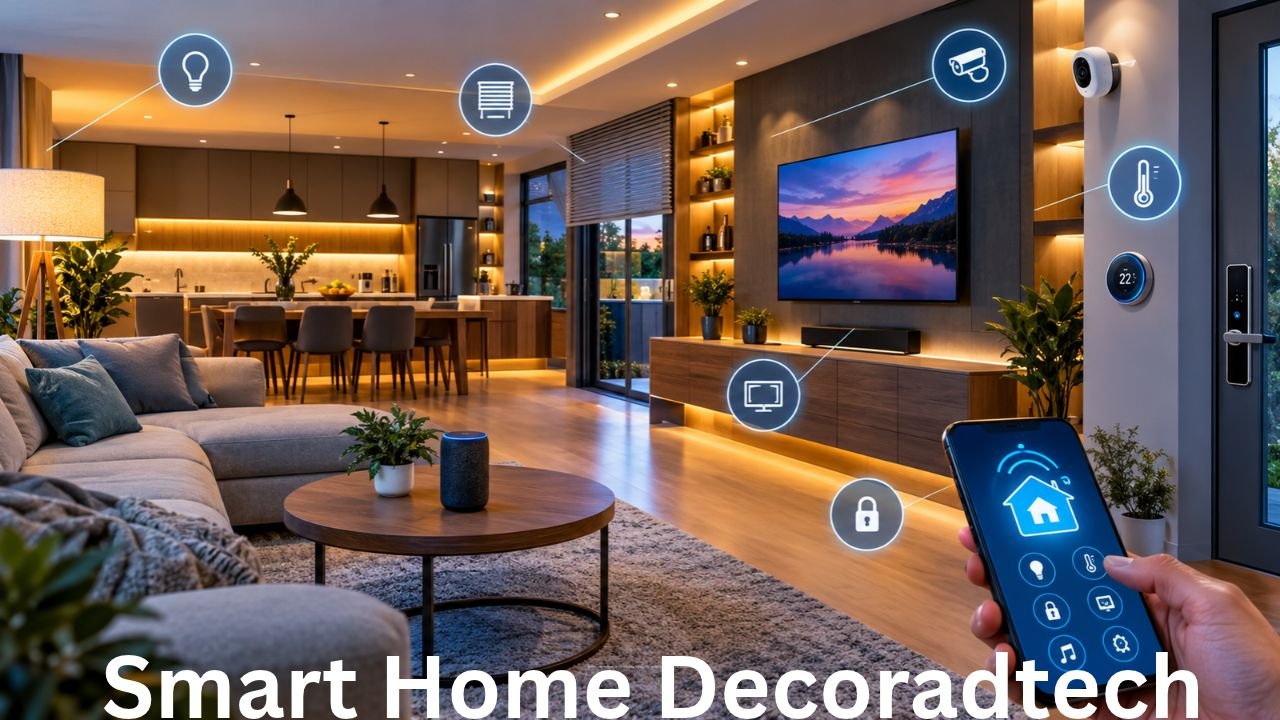
Smart home technology has moved far beyond voice-controlled lights and basic security cameras. Today, homeowners can combine technology with interior design to create spaces that are comfortable, attractive, efficient, and easier to manage. This growing approach is often described through terms such as smart home decoradtech, where smart devices and modern home décor work together rather than competing with each other.
A well-designed smart home does not need to look like a collection of gadgets. The best setups blend technology naturally into the room. Hidden charging stations, stylish smart lighting, connected thermostats, automated blinds, smart speakers, and modern security systems can all become part of a home’s overall design.
Whether you are renovating one room or planning a complete smart home, understanding how technology fits into décor can help you make better decisions. This guide explores practical ideas, popular devices, design considerations, and simple ways to create a smarter and more beautiful home.
What Does Smart Home Decoradtech Mean?
Smart home decoradtech can be understood as the combination of home décor, interior design, and smart technology. The idea is to create living spaces where connected devices provide useful functions while also fitting naturally into the home’s visual style.
Traditional smart-home planning often focuses mainly on functionality. Decoradtech takes another important factor into consideration: appearance.
For example, instead of installing a noticeable security device that looks out of place, homeowners can choose a compact camera with a minimalist design. Instead of relying on harsh overhead lighting, they can use smart bulbs and concealed LED strips to create different moods.
The goal is simple: technology should improve the room without making the room feel overly technical.
Why Smart Technology Matters in Modern Décor
Technology has become part of everyday life, so it makes sense for it to be considered during the design process.
A smart home can provide several advantages:
- Better control over lighting and temperature
- Improved energy efficiency
- Greater convenience
- Enhanced home security
- Easier entertainment management
- More organized spaces
- Personalized room settings
- Reduced visual clutter when devices are planned properly
For homeowners, the biggest benefit is that technology can now be integrated into the design from the beginning rather than added as an afterthought.
Smart Lighting as a Key Part of Home Design
Lighting is one of the easiest ways to combine technology with décor.
Smart bulbs and connected lighting systems allow homeowners to adjust brightness, color temperature, and sometimes color from a phone or voice assistant. This makes it possible to create different lighting environments throughout the day.
For example, a living room could have bright, neutral lighting during the afternoon and softer warm lighting in the evening.
Ideas for Smart Lighting
Consider using:
- Smart ceiling lights
- Dimmable smart bulbs
- Under-cabinet lighting
- LED strips behind furniture
- Motion-activated hallway lights
- Smart bedside lamps
- Accent lighting for artwork or shelves
Lighting can also help highlight architectural features. A strategically placed LED strip can make shelving, a television wall, or a kitchen counter more visually interesting.
Smart Furniture and Hidden Technology
One of the biggest challenges in smart home design is managing cables and devices.
Nobody wants a beautifully decorated room covered with charging wires. Smart home decoradtech encourages homeowners to think about technology placement before furniture and accessories are finalized.
Modern furniture can provide opportunities for hidden technology.
Examples include:
- Side tables with built-in charging areas
- Beds with integrated USB or wireless charging
- Desks with concealed cable management
- TV cabinets with hidden equipment storage
- Sofas with integrated charging ports
- Mirrors with smart lighting
The advantage is that technology remains accessible without becoming the main visual feature of the room.
Smart Home Technology for the Living Room
The living room is often the central area of a home, making it an ideal place for smart technology.
A smart television can serve as an entertainment center, while smart speakers can provide music and voice control. Automated lighting can change the atmosphere depending on the activity.
For a clean appearance, consider placing devices strategically.
A simple living-room setup might include:
| Smart Feature | Main Benefit | Design Consideration |
|---|---|---|
| Smart TV | Entertainment | Use a wall-mounted or streamlined setup |
| Smart lighting | Flexible atmosphere | Match fixtures with room décor |
| Smart speaker | Music and voice control | Choose a compact design |
| Smart blinds | Privacy and light control | Coordinate fabric with interiors |
| Smart thermostat | Temperature management | Use a minimalist wall design |
| Smart plugs | Device automation | Hide them behind furniture where possible |
The goal is not to fill the room with smart products. Instead, choose technology that solves a genuine problem.
Creating a Smart and Stylish Bedroom
The bedroom should feel comfortable and relaxing. Technology should support that atmosphere rather than dominate it.
Smart lighting can be particularly useful here. You might create a warm evening setting that gradually becomes brighter in the morning.
Smart blinds can also help control natural light and privacy. Meanwhile, wireless charging stations can eliminate the need for multiple charging cables on a bedside table.
Some practical bedroom ideas include:
- Automated bedside lighting
- Wireless charging pads
- Smart curtains or blinds
- Motion-sensitive night lights
- Smart air-quality monitors
- Temperature control
- Voice-controlled alarms and routines
Keep the number of visible devices limited. Bedrooms generally benefit from a calm, uncluttered appearance.
Smart Kitchens That Look Modern
The kitchen is another area where smart technology can improve both functionality and design.
Connected appliances can make everyday tasks easier. Smart ovens, refrigerators, coffee machines, lighting systems, and leak sensors can all contribute to a more convenient kitchen.
However, technology should not overwhelm the space.
Integrated appliances and consistent finishes can help maintain a cohesive appearance. If several devices have different colors, shapes, and finishes, the kitchen can quickly look visually busy.
When planning a smart kitchen, consider both function and consistency.
Smart Bathrooms and Connected Features
Bathrooms may not be the first room people associate with smart technology, but there are several useful applications.
Smart mirrors can combine lighting with additional features. Motion-activated lighting can make nighttime trips easier, while smart ventilation systems can help manage humidity.
Some homeowners may also consider connected showers or temperature-control systems.
The important thing is to prioritize safety, especially around electrical devices and water. Smart features should always be installed according to applicable electrical and building requirements.
Smart Home Security Without Ruining Your Décor
Security is one of the most practical reasons to introduce smart technology into a home.
Smart cameras, video doorbells, door sensors, motion detectors, and smart locks can provide additional control and monitoring.
But security devices do not have to become the visual focus of the exterior.
When possible, choose equipment with a simple appearance and install it where it provides good coverage without interfering with the property’s architectural style.
You can also coordinate visible components with existing exterior finishes where appropriate.
How to Avoid Technology Clutter
Adding more smart devices does not automatically make a home better.
In fact, too many gadgets can create a cluttered environment and make the technology harder to manage.
Before buying a new device, ask:
- Does it solve a real problem?
- Will I use it regularly?
- Can it work with my existing smart-home system?
- Does its design fit the room?
- Does it require another unnecessary app?
- Can the device be placed or stored discreetly?
These questions can prevent unnecessary purchases.

Choosing a Smart Home Ecosystem
Compatibility is another important part of smart home decoradtech.
Different devices may use different platforms and communication standards. Before purchasing several products, check whether they can work together.
A connected ecosystem can make everyday routines much easier.
For example, one automated routine could:
- Dim the lights
- Adjust the thermostat
- Close the blinds
- Lock compatible doors
- Turn off selected appliances
The exact capabilities depend on the products and platform being used, but the principle is the same: fewer manual steps can make a smart home feel more natural.
Energy Efficiency and Smart Home Design
Smart technology can also contribute to more efficient home management.
Smart thermostats can help regulate heating and cooling based on schedules or occupancy. Smart lighting can automatically turn off when rooms are empty. Smart plugs can help manage selected appliances.
These features do not guarantee lower energy bills because savings depend on how the system is configured and used. However, automation can make it easier to avoid unnecessary energy consumption.
This is where technology and practical home improvement can work together.
Smart Home Decoradtech Trends to Watch
The future of smart home design is likely to focus less on visible gadgets and more on seamless integration.
Some trends include:
More Hidden Technology
Charging stations, speakers, sensors, and controls are increasingly being incorporated into furniture, walls, ceilings, and cabinetry.
Better Ambient Lighting
Instead of relying on a single ceiling fixture, homeowners can combine multiple smart light sources to create layered illumination.
Minimalist Interfaces
People increasingly want technology that is simple to control without requiring a complicated setup.
Automated Comfort
Temperature, lighting, blinds, and air quality can increasingly work together to create personalized environments.
Design-First Smart Devices
As smart-home products become more common, appearance is becoming an increasingly important part of product design.
Common Mistakes to Avoid
Even a smart home can have design problems if technology is added without planning.
Avoid these common mistakes:
- Buying devices without checking compatibility
- Installing too many visible gadgets
- Ignoring cable management
- Choosing technology based only on appearance
- Forgetting about privacy and security settings
- Installing smart products without considering future maintenance
- Creating complicated automation routines nobody uses
A successful smart home should make everyday life easier, not more complicated.
Frequently Asked Questions
What is smart home decoradtech?
Smart home decoradtech refers to combining smart-home technology with interior and exterior design. The objective is to create spaces where connected devices provide useful functions while fitting naturally into the home’s décor.
Is smart home technology expensive?
It can be, but homeowners do not need to upgrade everything at once. Starting with smart lighting, plugs, or a thermostat can provide useful automation without requiring a complete renovation.
Can smart devices look good in a modern home?
Yes. Many modern smart devices are designed with minimalist aesthetics. Careful placement, concealed cables, and coordinated finishes can make technology blend into the room.
What is the best room to start with?
The living room or bedroom can be a good starting point because lighting, entertainment, charging, and comfort controls can provide immediate benefits.
Do all smart-home devices work together?
No. Compatibility varies between devices and platforms. Always check supported ecosystems and communication standards before purchasing multiple products.
Does a smart home save energy?
Smart technology can help reduce unnecessary energy use through automation, scheduling, and monitoring. However, actual savings depend on the devices, settings, home, and habits of the occupants.
Final Thoughts
Smart home decoradtech represents a more thoughtful way of combining technology with modern living spaces. Instead of treating smart devices as separate gadgets, homeowners can make them part of the overall design.
The best smart homes are not necessarily the ones with the most technology. They are the ones where technology solves everyday problems while maintaining a comfortable, attractive, and organized environment.
Start small, focus on practical improvements, manage cables carefully, and choose devices that fit your existing décor. With the right approach, smart technology can make a home more convenient without taking away from its personality.
Also Read: Decoradtech Home Devices From DecoratorAdvice: Smart Ideas for a Modern Home


One thought on “Smart Home Decoradtech: How Technology Is Changing Modern Home Design”