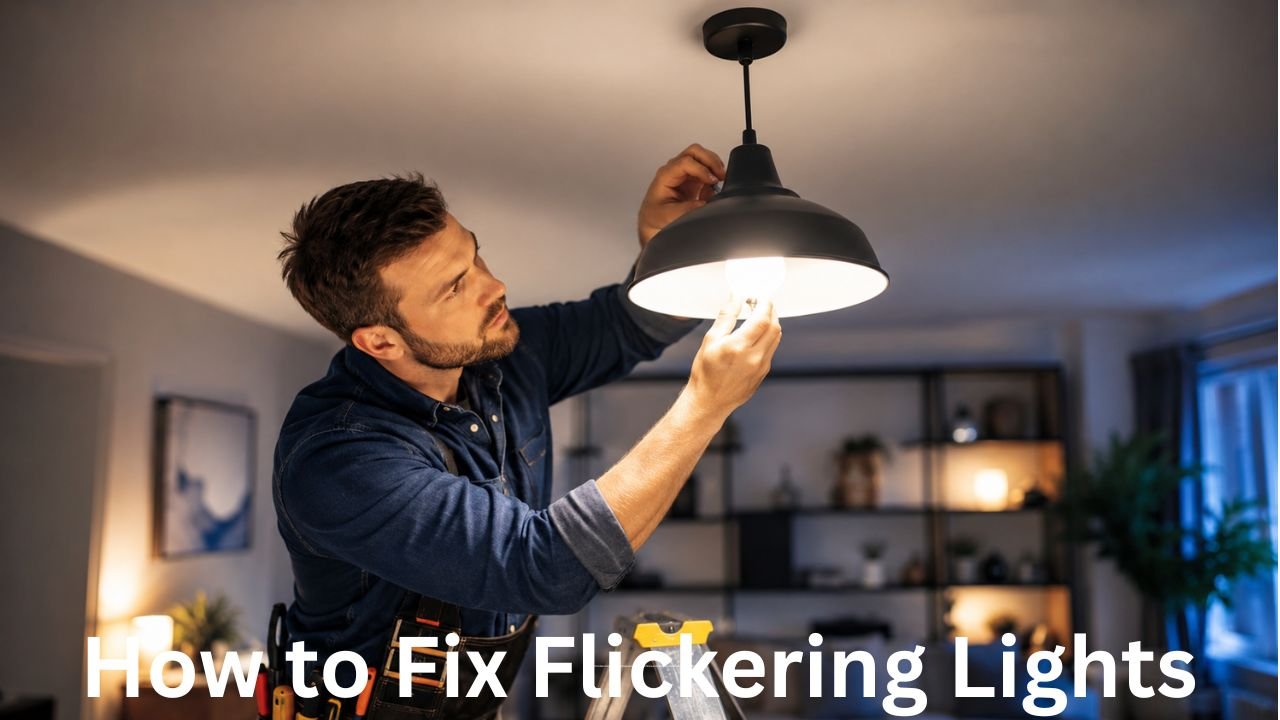
Flickering lights can be annoying, distracting, and sometimes difficult to understand. A light that briefly dims, pulses, or repeatedly turns on and off may have a simple cause, such as a loose bulb. In other situations, flickering can point to an electrical problem that should not be ignored.
If you are wondering how to fix flickering lights, the first step is to identify what is causing the problem. The issue could be related to the bulb, light fixture, dimmer switch, wiring, circuit load, or even a larger electrical problem in your home.
This guide explains the most common causes of flickering lights, practical troubleshooting steps, and situations where you should call a qualified electrician.
What Causes Lights to Flicker?
Flickering does not always mean that something is seriously wrong. Different types of lights can behave differently, and the cause can range from a minor connection issue to a more significant electrical fault.
Common causes include:
- A loose or incorrectly installed bulb
- A failing LED or CFL bulb
- An incompatible dimmer switch
- A loose connection in the fixture
- Faulty wiring
- An overloaded circuit
- Voltage fluctuations
- A problem with a major appliance
- Issues with the electrical service entering the home
The pattern of the flickering can also provide useful clues. If only one light flickers, the problem is often local to that bulb or fixture. If several lights flicker at the same time, the issue may involve the circuit or electrical supply.
How to Fix Flickering Lights Safely
Before troubleshooting any electrical problem, safety should come first. You should never remove electrical components or work on exposed wiring while power is connected.
Here are some basic steps you can take without opening electrical boxes.
1. Check Whether the Bulb Is Loose
One of the easiest fixes is also one of the most common.
Turn the light off and allow the bulb to cool if it has been operating. Once it is safe to handle, make sure the bulb is properly seated in the socket.
A loose bulb may not maintain consistent electrical contact, causing intermittent flickering.
If tightening the bulb solves the problem, monitor the light for a while. If the flickering returns, the socket or another component may be responsible.
2. Replace the Bulb
A bulb can flicker when it is reaching the end of its useful life.
LED bulbs can last for many years, but they can still fail prematurely because of manufacturing defects, overheating, poor-quality components, or compatibility problems.
Try replacing the flickering bulb with a new bulb of the correct type and wattage.
If the new bulb works normally, the original bulb was probably the problem.
For LED fixtures, make sure the replacement is designed for the fixture and intended for the type of electrical control being used.
3. Check the Dimmer Switch
If flickering occurs only when a light is connected to a dimmer, compatibility could be the issue.
Some older dimmer switches were designed for incandescent bulbs and may not work properly with modern LED bulbs. This can result in:
- Flickering
- Buzzing
- Pulsing
- Lights failing to turn on correctly
- Uneven brightness
A dimmer specifically designed for LED lighting may solve the problem.
If you are unsure whether your dimmer and bulb are compatible, check the manufacturer’s specifications or have an electrician inspect the setup.
4. Test the Light Without Other Appliances Running
Large appliances can temporarily draw substantial amounts of electricity when their motors or heating elements start.
For example, if your lights flicker whenever an air conditioner, refrigerator, washing machine, or other high-power appliance starts, the electrical circuit may be experiencing a noticeable load change.
Try observing when the flickering happens.
If the lights consistently flicker when a particular appliance starts, do not assume that replacing the bulb will solve the problem. The circuit, connections, appliance, or electrical service may need professional evaluation.
5. Determine Whether One Light or Multiple Lights Are Flickering
This is an important troubleshooting step.
If a single lamp or ceiling light flickers, the problem may be limited to that fixture. If multiple lights throughout the house flicker at the same time, the issue could be more widespread.
Use this simple comparison:
| Flickering Pattern | Possible Cause | Recommended Action |
|---|---|---|
| One bulb flickers | Loose or failing bulb | Reseat or replace bulb |
| One fixture flickers | Socket, fixture, or connection | Have fixture inspected if bulb replacement fails |
| Several lights on one circuit flicker | Circuit or wiring issue | Contact an electrician |
| Lights flicker when an appliance starts | Electrical load or voltage fluctuation | Have the circuit evaluated |
| Lights throughout the home flicker | Service or supply problem | Contact an electrician or utility provider |
| LED lights flicker with dimmer | Compatibility issue | Use a compatible LED dimmer |
This pattern can help you determine whether the problem is likely to be simple or requires professional attention.
6. Look for Signs of a Faulty Fixture
Sometimes the bulb is fine, but the light fixture is not.
A damaged socket, loose internal connection, excessive heat, or deteriorating fixture component can cause intermittent lighting.
Watch for warning signs such as:
- Burning smells
- Discoloration around the fixture
- Crackling sounds
- Buzzing
- Excessive heat
- Visible damage
- A light that repeatedly turns off and on
If you notice any of these signs, stop using the fixture and have it inspected by a qualified electrician.
Do not attempt to repair exposed wiring yourself unless you have the appropriate electrical knowledge and qualifications.

7. Consider Voltage Fluctuations
Voltage changes can cause lights to become brighter or dimmer unexpectedly.
A small, occasional change may be related to normal electrical activity, but repeated or significant fluctuations should not be ignored.
If multiple lights throughout your home flicker, particularly when large electrical loads turn on or off, there could be an issue with the home’s electrical system or incoming electrical supply.
An electrician can test the system and determine whether the problem originates inside the property.
If the electrical system appears normal, the utility provider may need to investigate the incoming supply.
8. Check for Overloaded Circuits
Modern homes use many electrical devices at the same time. Computers, televisions, air conditioners, kitchen appliances, chargers, heaters, and other equipment can place considerable demand on electrical circuits.
An overloaded circuit may cause lights to dim or flicker when multiple devices are operating.
Avoid repeatedly resetting a circuit breaker simply to keep an overloaded circuit running. Instead, reduce the electrical load and have the system evaluated if the problem continues.
An electrician can determine whether circuits are appropriately sized and whether the electrical distribution in the home needs improvement.
When Should You Call an Electrician?
Knowing when to stop troubleshooting yourself is an important part of learning how to fix flickering lights.
You should contact a qualified electrician if:
- Multiple lights flicker throughout the house.
- Flickering occurs frequently.
- Lights become unusually bright or dim.
- You hear buzzing or crackling.
- You smell burning plastic or electrical insulation.
- A light switch becomes unusually warm.
- Circuit breakers trip repeatedly.
- You notice sparks.
- Outlets or switches show discoloration.
- Flickering began after electrical work or remodeling.
- You suspect damaged or loose wiring.
Electrical faults can create fire and shock hazards. A professional can inspect the circuit, connections, switches, fixtures, and electrical panel using appropriate testing equipment.
LED Lights and Flickering Problems
LED lighting is energy-efficient and widely used, but it can sometimes be more sensitive to electrical conditions than traditional incandescent bulbs.
An LED bulb may flicker because of:
- An incompatible dimmer
- Poor-quality electronics inside the bulb
- Incorrect bulb specifications
- A defective fixture
- Voltage fluctuations
- A loose connection
If only one LED bulb flickers, replacing it with a reputable compatible bulb is a reasonable first step.
If several LED lights flicker simultaneously, the problem may be unrelated to the bulbs themselves.
What Not to Do When Lights Flicker
Trying to solve an electrical problem without understanding its cause can make the situation worse.
Avoid:
- Ignoring persistent flickering
- Touching exposed electrical wiring
- Opening electrical panels without proper expertise
- Installing bulbs with incorrect ratings
- Repeatedly resetting tripped breakers
- Using damaged fixtures
- Continuing to use a fixture that smells burnt
- Assuming every flickering problem is caused by the bulb
A simple bulb replacement is generally straightforward, but electrical wiring and service problems require appropriate expertise.
A Simple Troubleshooting Process
If you want to know how to fix flickering lights without immediately calling a professional, start with the safest basic checks.
Follow this sequence:
- Turn the light off and let the bulb cool.
- Check that the bulb is properly installed.
- Replace the bulb with a compatible new one.
- If a dimmer is installed, check LED and dimmer compatibility.
- Observe whether other lights flicker.
- Note whether flickering occurs when appliances start.
- Look for heat, buzzing, burning smells, discoloration, or sparks.
- Stop using the affected fixture if warning signs appear.
- Contact a qualified electrician when the cause is not obvious or the problem persists.
This approach can help distinguish a simple lighting problem from a potentially larger electrical issue.

How to Prevent Flickering Lights
Preventing electrical problems is usually easier than dealing with repeated failures.
Consider these habits:
- Use bulbs that match the fixture’s specifications.
- Choose quality LED bulbs from reputable manufacturers.
- Use LED-compatible dimmers.
- Avoid overloading circuits.
- Replace damaged switches and fixtures.
- Have older electrical systems inspected when necessary.
- Pay attention to repeated breaker trips.
- Address unusual buzzing, heat, or burning smells promptly.
Regular attention to electrical equipment can help identify problems before they become more serious.
Frequently Asked Questions
Why are my lights flickering but not going out?
Lights can flicker because of a loose bulb, failing lamp, dimmer incompatibility, electrical load changes, or voltage fluctuations. If the issue continues after replacing the bulb, investigate further or contact an electrician.
Can a loose bulb cause flickering?
Yes. A bulb that is not making consistent contact with the socket can flicker. Turn the light off, allow it to cool, and make sure it is properly seated. Replace the bulb if necessary.
Why do LED lights flicker with a dimmer?
Some dimmers are not designed to work with LED bulbs. The electrical characteristics of LEDs differ from traditional incandescent bulbs, so an incompatible dimmer can cause flickering or other performance problems.
Is flickering light dangerous?
Occasional flickering caused by a failing bulb may be harmless, but persistent or widespread flickering can indicate an electrical problem. Burning smells, sparks, buzzing, heat, or repeated breaker trips are warning signs that should receive professional attention.
Why do all the lights in my house flicker?
When multiple lights flicker simultaneously, the cause may involve a circuit, electrical connection, voltage fluctuation, or incoming power supply rather than an individual bulb. A qualified electrician can determine the source.
Should I replace the light fixture if a bulb keeps flickering?
Not necessarily. The problem could be the bulb, socket, dimmer, wiring, or electrical supply. Replacing the fixture without identifying the cause may not solve the problem. If a new compatible bulb does not help, professional inspection is a better next step.
Final Thoughts
Learning how to fix flickering lights starts with identifying the pattern and checking the simplest possible causes first. A loose bulb or defective LED can often be addressed quickly, while dimmer compatibility may require a different bulb or control.
However, persistent flickering should never be treated as something to ignore. When several lights are affected, appliances trigger the flickering, or you notice buzzing, heat, burning smells, sparks, or repeated breaker trips, professional electrical inspection is the safest choice.
The goal is not simply to make the light stop flickering. It is to identify why the flickering is happening and make sure the electrical system remains safe and reliable.
Also Read: Best Indoor Plants for Low Light: Beautiful Choices for Darker Rooms


One thought on “How to Fix Flickering Lights: Causes, Solutions, and Safety Tips”