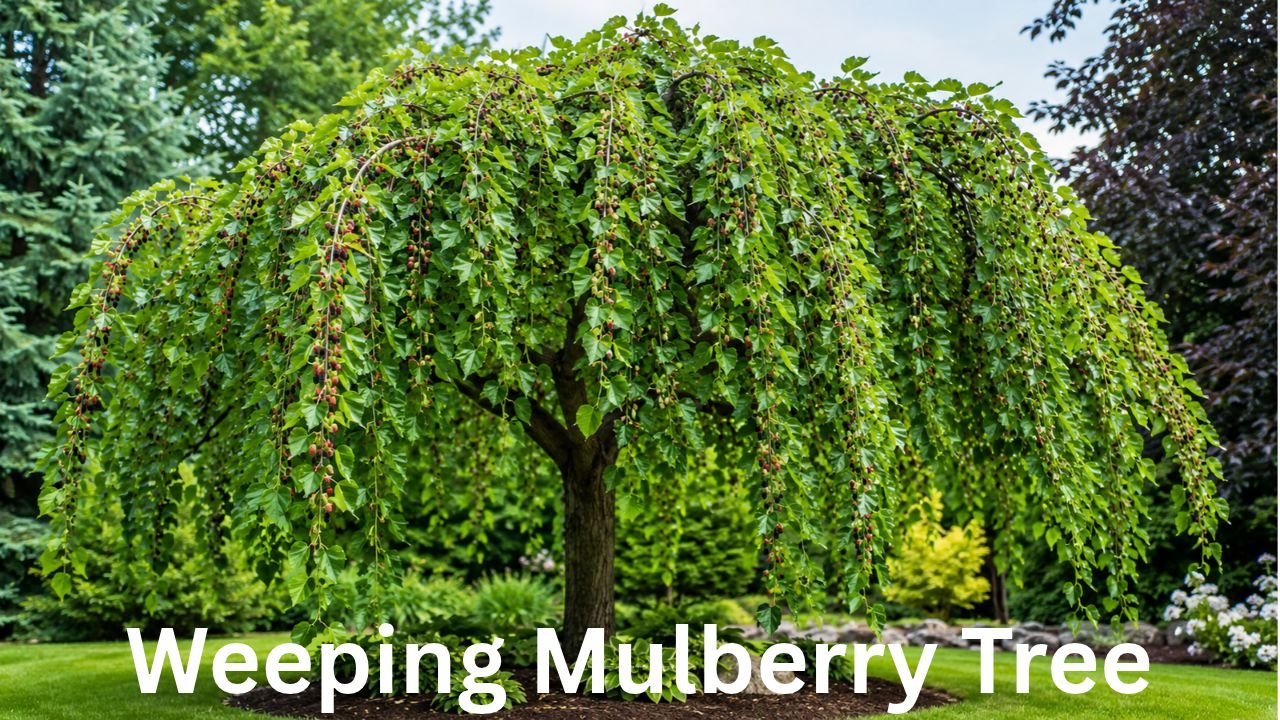
The weeping mulberry tree is a beautiful choice for gardeners who want something more distinctive than a traditional upright tree. Its long, cascading branches create a graceful appearance, while its dense foliage can provide shade and visual interest throughout the growing season.
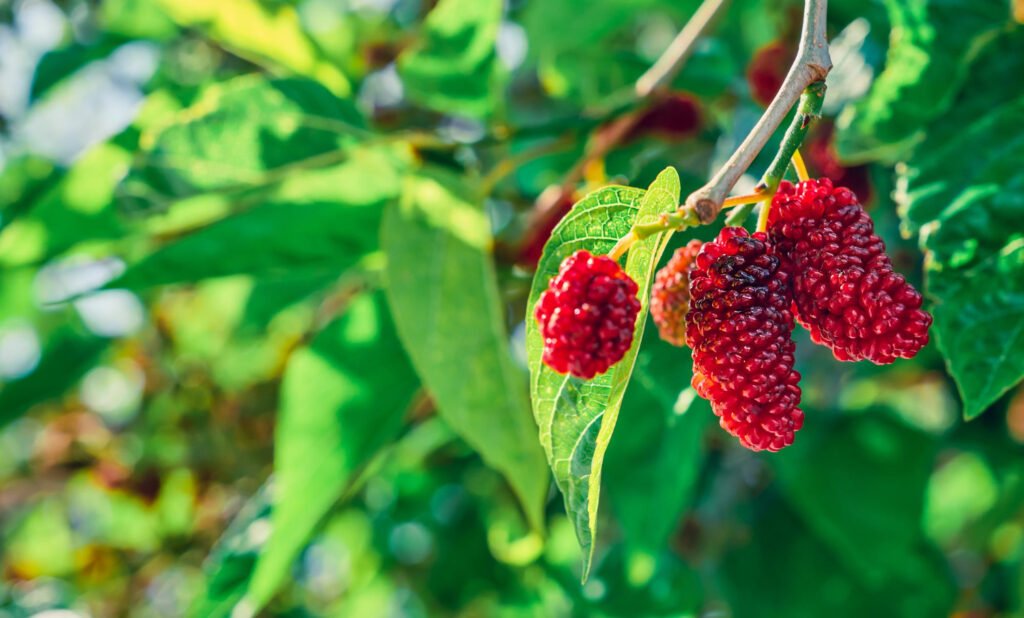
Unlike many ornamental trees, mulberries can also produce delicious fruit. Depending on the variety, the berries may range from red and pink to deep purple or nearly black when ripe. With the right location, watering routine, pruning, and general care, a weeping mulberry can become an attractive feature in a home landscape.
This guide explains everything you need to know about choosing, planting, growing, and maintaining a weeping mulberry tree.
What Is a Weeping Mulberry Tree?
A weeping mulberry is a mulberry tree with a naturally cascading growth habit. Instead of growing with branches that extend upward and outward, its flexible branches arch or hang toward the ground.
This growth pattern gives the tree a soft, umbrella-like appearance. It can work especially well as a focal point in a lawn, garden, or spacious backyard.
Mulberry trees belong to the Morus genus. Different species and cultivars vary in size, fruit production, leaf shape, and cold tolerance, so it is important to know which variety you are buying before planting.
The weeping form is particularly valued for its ornamental shape. Some varieties produce edible fruit, while others are primarily grown for their foliage and graceful structure.
Why Grow a Weeping Mulberry Tree?
There are several reasons gardeners choose this unusual tree.
1. Attractive Weeping Shape
The cascading branches are the tree’s biggest visual feature. A mature specimen can create an almost natural canopy, making it an excellent centerpiece for a garden.
2. Fast and Vigorous Growth
Mulberries are generally vigorous growers when they receive suitable sunlight, moisture, and soil conditions. A young tree can establish itself relatively quickly compared with many slower-growing ornamental trees.
3. Delicious Fruit
Fruit-producing varieties can provide sweet berries during the growing season. Fresh mulberries can be eaten directly from the tree or used in desserts, jams, smoothies, and other recipes.
4. Useful Shade
A healthy tree develops a substantial canopy. This can provide welcome shade during hot weather, particularly when the tree is planted in an open area.
5. Wildlife Value
Birds and other wildlife may be attracted to ripe mulberry fruit. If you enjoy watching birds in your garden, a fruiting mulberry can become a lively addition to the landscape.
Weeping Mulberry Tree at a Glance
| Feature | Typical Characteristics |
|---|---|
| Growth habit | Weeping or cascading |
| Light requirement | Full sun to partial shade |
| Soil | Well-draining, moderately fertile soil |
| Water needs | Moderate, especially while establishing |
| Growth rate | Generally fast to vigorous |
| Main attraction | Cascading branches and foliage |
| Fruit | Present on fruiting varieties |
| Best use | Lawn specimen, garden focal point, shade tree |
| Pruning | Regular structural pruning is helpful |
| Mature appearance | Broad, graceful, umbrella-like canopy |
Where Should You Plant a Weeping Mulberry?
Choosing the right location is one of the most important steps in successful tree care.
A weeping mulberry generally performs best where it receives plenty of sunlight. Full sun encourages healthy foliage and stronger growth, while sufficient light can also support better fruit production on fruiting varieties.
Give the tree plenty of room to spread. The hanging branches can eventually occupy a surprisingly large area, so avoid planting it directly against a building, narrow pathway, or other tree.
Before planting, consider:
- Available sunlight throughout the day
- Mature canopy size
- Distance from buildings and structures
- Space for branches to cascade naturally
- Drainage and soil quality
- Nearby sidewalks, patios, or seating areas
The tree’s attractive form is best appreciated when it has enough open space to develop naturally.
Soil Requirements
Weeping mulberries are generally adaptable, but good drainage is important.
Avoid locations where water regularly collects after rainfall. Constantly saturated soil can create unfavorable conditions around the roots and may contribute to root problems.
A moderately fertile soil with good drainage is usually suitable. If your soil is compacted, improving its structure with appropriate organic matter before planting can help create a better environment for root development.
A soil test can also be useful if you are unsure about fertility or pH.
How to Plant a Weeping Mulberry Tree
Planting correctly gives your tree a much better start.
Step 1: Choose a Suitable Location
Select a sunny or lightly shaded area with enough room for the mature tree.
Step 2: Prepare the Planting Hole
Dig a hole that is wider than the tree’s root ball but not unnecessarily deep. The root flare should remain at or slightly above the surrounding soil level rather than being buried deeply.
Step 3: Position the Tree
Carefully place the tree in the center of the hole. Check it from several directions to make sure it is standing straight.
Step 4: Backfill
Return the original soil around the roots. Gently firm the soil to eliminate major air pockets without compacting it excessively.
Step 5: Water Thoroughly
Give the newly planted tree a deep watering. This helps settle the soil around the roots.
Step 6: Add Mulch
Apply a layer of organic mulch around the root zone. Keep the mulch away from direct contact with the trunk.

Watering a Weeping Mulberry Tree
Young trees need more consistent moisture while their root systems are becoming established.
Instead of watering lightly every day, it is usually better to provide a thorough watering when the soil begins to dry. The exact schedule depends on rainfall, temperature, soil type, and the tree’s age.
During particularly hot or dry periods, monitor the soil more frequently.
Signs that your tree may need attention include:
- Drooping leaves
- Dry soil several inches below the surface
- Premature leaf drop
- Slow or weak new growth
At the same time, avoid keeping the soil constantly saturated. Mature mulberries are more tolerant of short dry periods than of persistently waterlogged roots.
Fertilizing Your Tree
A healthy weeping mulberry may not require heavy fertilization, particularly when planted in fertile soil.
Too much fertilizer can encourage excessive leafy growth at the expense of balanced development. It can also create unnecessary stress for the plant.
If growth appears weak or a soil test indicates a nutrient deficiency, use an appropriate balanced fertilizer according to the product’s instructions.
Applying fertilizer based on actual soil and plant needs is generally better than following a routine that provides unnecessary nutrients.
Pruning a Weeping Mulberry Tree
Pruning is particularly important for a weeping tree because its branches naturally cascade downward.
The goal is not to remove its distinctive shape but to maintain a strong structure and prevent unwanted branches from becoming problematic.
Remove:
- Dead or damaged branches
- Diseased growth
- Crossing branches
- Weakly attached limbs
- Branches that interfere with walkways
- Excess growth that creates poor structure
Young trees benefit from thoughtful structural pruning because early decisions can influence the shape of the mature canopy.
Avoid excessive pruning. Removing too much healthy growth at once can weaken the tree and spoil its natural appearance.
Common Problems and How to Handle Them
Although mulberries can be vigorous, they are not completely free from problems.
Pests
Various insects may occasionally feed on mulberry foliage or young growth. Regularly inspecting leaves and branches makes it easier to notice an issue before it becomes severe.
Look for:
- Discolored leaves
- Holes in foliage
- Sticky residue
- Unusual insects
- Distorted new growth
Identify the pest before choosing a treatment rather than applying an insecticide automatically.
Diseases
Fungal and other plant diseases can sometimes affect trees, particularly when conditions remain wet and air circulation is poor.
Good planting practices can help reduce risk. Give the tree sufficient space, avoid unnecessary overhead watering, and remove severely damaged plant material when appropriate.
Root Problems
Poor drainage is one of the more important concerns to avoid. If the planting location stays wet for extended periods, the roots may struggle.
Choosing a well-drained site from the beginning is much easier than trying to correct a serious drainage problem after the tree becomes established.
Weeping Mulberry Tree vs. Regular Mulberry
Both forms can be attractive, but they serve somewhat different landscape purposes.
A traditional mulberry often develops a more upright or spreading structure. A weeping mulberry, by contrast, is valued for its hanging branches and ornamental silhouette.
If your priority is a dramatic garden focal point, the weeping form may be especially appealing. If you mainly want maximum fruit production, you should compare specific cultivars based on fruit quality, mature size, climate suitability, and productivity.
The best choice ultimately depends on how you plan to use the tree.
How to Keep a Weeping Mulberry Looking Its Best
Regular observation is often more valuable than complicated maintenance.
A simple care routine can include:
- Check soil moisture during dry weather.
- Inspect leaves and branches for pests.
- Remove dead or damaged wood.
- Keep grass and weeds from competing heavily around the trunk.
- Maintain a suitable mulch layer.
- Prune selectively to preserve structure.
- Watch the canopy for branches becoming too low or crowded.
With consistent care, the tree can maintain its characteristic cascading appearance for years.
Is a Weeping Mulberry Suitable for a Small Yard?
This depends on the specific cultivar and the amount of space available.
A weeping tree may appear compact when young, but its mature canopy can become much larger. Before purchasing one, check the expected mature height and spread rather than choosing based only on the size of the nursery specimen.
For a small yard, look for a cultivar with a manageable mature size and make sure the planting location allows its branches to develop without obstructing paths, structures, or neighboring plants.
Frequently Asked Questions
Is a weeping mulberry tree easy to grow?
Generally, yes. Mulberries can be vigorous and adaptable when planted in a suitable location. Providing adequate sunlight, good drainage, appropriate watering, and occasional pruning can help the tree establish successfully.
Does a weeping mulberry produce fruit?
Some weeping mulberry varieties produce fruit, while others are selected primarily for their ornamental characteristics. Always check the specific cultivar before buying if fruit production is important to you.
How much sunlight does a weeping mulberry need?
A location with plenty of sunlight is generally ideal. Good light supports vigorous growth and can encourage fruit production on fruiting varieties.
When should a weeping mulberry be pruned?
Pruning is often easiest when the tree is dormant, although dead, damaged, or hazardous branches can be addressed whenever necessary. The exact timing can depend on the local climate and the reason for pruning.
Can a weeping mulberry grow in a container?
Some smaller specimens may be grown temporarily in containers, but the long-term suitability depends heavily on the cultivar and container size. Because mulberries can develop substantial root systems, a permanent container-grown tree requires careful selection and maintenance.
How long does a weeping mulberry tree live?
The lifespan varies depending on the species or cultivar, climate, growing conditions, and care. A healthy tree planted in an appropriate location can remain a long-term landscape feature.
Final Thoughts
A weeping mulberry tree can bring a distinctive combination of beauty, shade, foliage, and, in fruiting varieties, delicious berries to a landscape. Its cascading branches make it particularly attractive as a garden centerpiece, while its vigorous growth can provide a substantial canopy over time.
The key to success is choosing the right location and giving the tree enough space to mature. Good drainage, adequate sunlight, sensible watering, and thoughtful pruning will help maintain both its health and its graceful form.
If you are looking for a tree that offers more personality than an ordinary landscape specimen, a weeping mulberry may be an excellent choice. With proper planning and routine care, it can become one of the most eye-catching features in your garden.
Also Read: Prayer Plant Care: A Complete Guide to Growing Healthy, Beautiful Prayer Plants



One thought on “Weeping Mulberry Tree: A Complete Guide to Growing, Caring for, and Enjoying This Beautiful Tree”