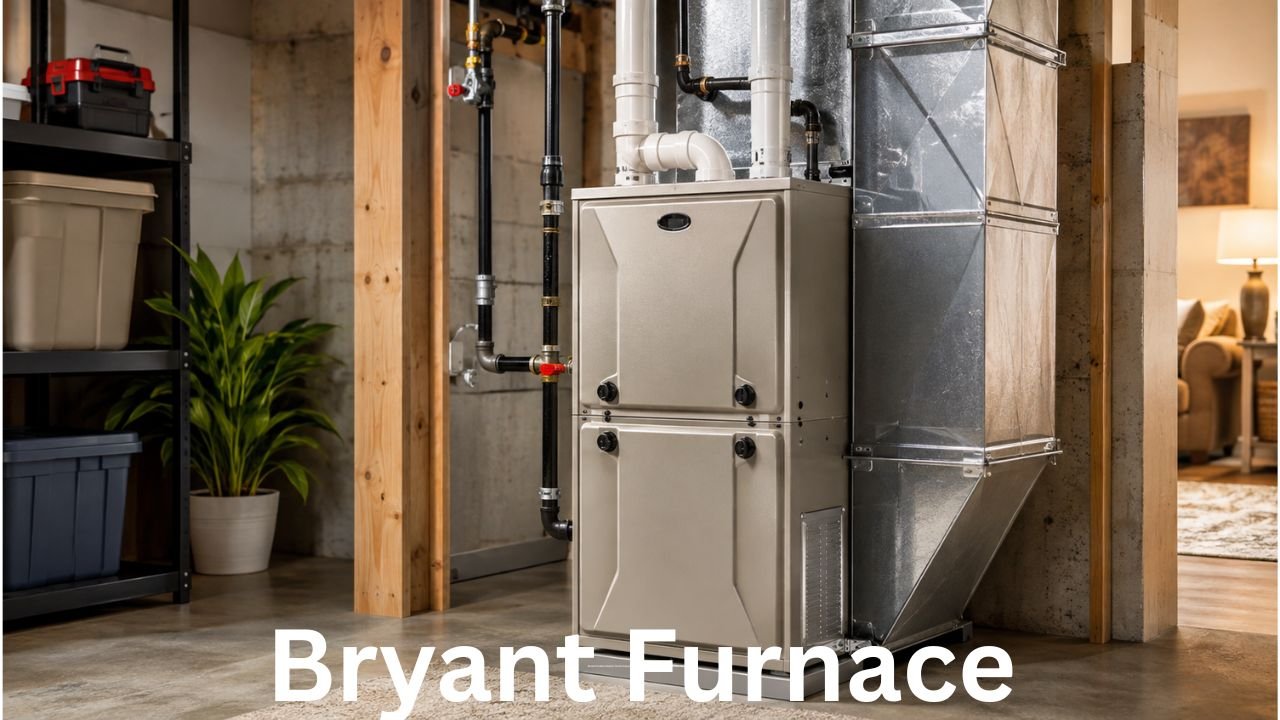
A reliable furnace can make a major difference in how comfortable your home feels during the colder months. When homeowners begin researching heating systems, Bryant furnace models often appear because of the brand’s long-standing presence in residential heating and cooling.
Choosing a furnace, however, is about more than picking a recognizable name. The right system depends on your home’s size, insulation, local climate, existing ductwork, budget, and expectations for energy efficiency. It is also important to understand furnace efficiency ratings, maintenance requirements, installation quality, and potential operating costs before making a decision.
This guide explains what homeowners should know about Bryant furnaces, including how they work, efficiency options, common features, maintenance, installation considerations, and questions to ask before buying one.
What Is a Bryant Furnace?
A Bryant furnace is a residential heating system designed to warm indoor spaces by producing heat and distributing it through a home’s ductwork. Bryant offers gas furnaces in different configurations, allowing homeowners to choose equipment based on heating requirements and efficiency goals.
A typical forced-air furnace works through several basic steps. When the thermostat detects that the indoor temperature has fallen below the selected setting, it sends a signal to the heating system. The furnace starts its heating cycle, warms air, and uses a blower to move that air through the home’s ducts.
The heated air then enters individual rooms through supply vents. Cooler indoor air returns to the furnace through return ducts, where it can be reheated and circulated again.
The basic process is simple, but the technology inside modern furnaces can vary considerably.
Bryant Furnace Efficiency Explained
One of the most important factors when comparing furnaces is efficiency. A furnace’s efficiency indicates how effectively it converts fuel into usable heat.
For gas furnaces, efficiency is commonly expressed using Annual Fuel Utilization Efficiency (AFUE). A higher AFUE rating generally means the furnace converts a greater portion of its fuel into heat.
For example, a furnace with a 95% AFUE rating theoretically converts about 95% of its fuel energy into usable heat, while the remainder is lost through the combustion and exhaust process.
However, the highest efficiency rating isn’t automatically the best choice for every home.
Installation cost, expected years of use, local fuel prices, climate, and the condition of your home’s insulation all influence whether upgrading to a more efficient model makes financial sense.
Why Efficiency Matters
A more efficient furnace can potentially:
- Reduce fuel consumption
- Lower heating expenses
- Provide more consistent indoor temperatures
- Reduce unnecessary energy waste
- Improve long-term operating performance
Homeowners should look at both the equipment price and expected operating costs rather than focusing exclusively on the efficiency number.
Bryant Furnace Types and Features
Bryant’s furnace lineup has included different levels of efficiency and comfort technology. The exact models and specifications available can change over time, so homeowners should verify current details with Bryant or an authorized dealer before purchasing.
Generally, furnace systems can be understood by looking at their heating stages, blower operation, and efficiency.
Single-Stage Furnaces
A single-stage furnace generally operates at one heating level when there is a call for heat.
This design can be relatively straightforward and may have a lower initial equipment cost. It can make sense for homeowners who want a basic heating solution without paying extra for advanced comfort features.
The trade-off is that the furnace has less ability to adjust its output to changing heating demands.
Two-Stage Furnaces
Two-stage furnaces can operate at different heating levels depending on demand.
During mild heating conditions, the furnace may operate at a lower output for longer periods. When the home needs more heat, it can switch to a higher stage.
This approach may provide more consistent temperatures and reduce frequent full-power cycling compared with a basic single-stage system.
Variable-Speed Blower Systems
Some higher-end furnace configurations use variable-speed blower technology.
Instead of simply running at one fixed speed, the blower can adjust airflow according to system requirements. This can contribute to more even temperature distribution and quieter operation.
Variable-speed technology can also work particularly well with modern air-conditioning systems and smart thermostat setups.
Bryant Furnace Features Worth Considering
When comparing a Bryant furnace, don’t look only at the brand name. Consider the features that could make a meaningful difference in your particular home.
| Feature | Why It Matters | Best For |
|---|---|---|
| High AFUE efficiency | Can reduce fuel waste | Homeowners focused on operating costs |
| Two-stage heating | Provides more flexible heating output | Homes with changing heating demands |
| Variable-speed blower | Helps regulate airflow | Comfort-focused households |
| Advanced filtration compatibility | Can support better air filtration | Homes concerned with indoor air quality |
| Smart thermostat compatibility | Allows more flexible temperature control | Connected homes |
| Quiet operation features | Can reduce noticeable furnace noise | Bedrooms and living areas |
| Durable heat exchanger | Important for long-term furnace performance | Long-term homeowners |
The most useful combination depends on your home rather than simply choosing the most expensive configuration.
How Much Does a Bryant Furnace Cost?
The total cost of installing a Bryant furnace can vary significantly. There is no single price that applies to every installation.
The final amount may depend on:
- Furnace size
- Efficiency rating
- Model and features
- Labor rates in your area
- Existing ductwork
- Venting requirements
- Electrical modifications
- Removal of an old furnace
- Thermostat replacement
- Local building requirements
A basic replacement can be considerably different from a complete heating-system installation involving ductwork or other modifications.
It is usually better to obtain several detailed estimates rather than choosing a contractor based solely on the lowest quoted price.
Ask each contractor to specify the equipment model, efficiency rating, installation work, warranty information, labor, and any additional charges.

Choosing the Right Bryant Furnace Size
Furnace sizing is one of the most important parts of the installation process.
A furnace that is too small may struggle to keep your home warm during colder weather. It may run for extended periods and still fail to maintain the desired indoor temperature.
An oversized furnace can create a different set of problems. It may heat the home quickly and shut off repeatedly, resulting in short cycling. Frequent cycling can affect comfort and may increase mechanical wear.
A professional contractor should perform a proper heating-load calculation rather than selecting equipment based only on the size of your existing furnace.
Your home’s:
- Square footage
- Insulation
- Window area
- Ceiling height
- Climate
- Air leakage
- Ductwork
- Building orientation
can all affect the required heating capacity.
Bryant Furnace Installation Matters
Even an excellent furnace can perform poorly if it is installed incorrectly.
Installation affects airflow, combustion, venting, drainage, electrical connections, thermostat operation, and overall system performance.
A qualified HVAC professional should verify that the selected furnace is appropriate for the home and that the installation follows applicable local requirements and manufacturer instructions.
After installation, homeowners should receive information about operating the system, maintenance requirements, warranty registration, and recommended service intervals.
The quality of installation is often just as important as the equipment itself.
Common Bryant Furnace Problems
Like any mechanical heating system, a Bryant furnace can eventually experience problems. Some issues are minor, while others require professional attention.
Furnace Does Not Turn On
If the furnace does not start, check simple possibilities first.
Make sure the thermostat is set to heating mode and that its temperature setting is above the current room temperature. You can also check whether the furnace has power.
If the system still does not operate, professional diagnosis may be necessary.
Furnace Blows Cold Air
Cold air from the vents can have several possible causes. The furnace may be experiencing an ignition issue, airflow problem, thermostat problem, or another mechanical fault.
Avoid repeatedly resetting a furnace without understanding why it stopped working. A technician can identify the underlying cause safely.
Frequent Cycling
If the furnace repeatedly starts and stops within short periods, the system may be oversized, overheating, experiencing restricted airflow, or dealing with another issue.
A dirty filter is one possible cause, but frequent cycling should not automatically be blamed on the filter.
Weak Airflow
Weak airflow can result from a clogged filter, blocked vents, ductwork problems, blower issues, or other restrictions.
Start by checking whether supply and return vents are open and unobstructed. If airflow remains weak, professional inspection is recommended.
Bryant Furnace Maintenance Tips
Regular maintenance can help keep a furnace operating safely and efficiently.
Homeowners can handle a few basic tasks, while more technical inspections should be left to qualified HVAC professionals.
Replace or Clean the Filter
A dirty air filter can restrict airflow and force the system to work harder. Check the filter regularly and replace it according to the filter manufacturer’s recommendations.
Homes with pets, dust, or frequent occupancy may require more frequent filter attention.
Keep Vents Clear
Furniture, curtains, rugs, and other objects should not block supply or return vents.
Good airflow allows the heating system to distribute warmth more effectively.
Schedule Professional Service
Professional furnace maintenance can include inspection of components that homeowners should not attempt to service themselves.
Depending on the system, a technician may inspect:
- Electrical connections
- Burner operation
- Heat exchanger condition
- Combustion and venting
- Blower components
- Safety controls
- Drainage
- Overall system operation
Bryant Furnace vs. Other Furnace Brands
Homeowners often compare Bryant with other established HVAC manufacturers. Instead of choosing based entirely on brand reputation, compare the specific systems being considered.
Important factors include efficiency, equipment features, warranty terms, contractor reputation, installation quality, expected operating costs, and availability of replacement parts or service in your area.
A well-installed mid-range furnace can be a better choice than a premium furnace that is poorly sized or improperly installed.
The contractor and installation should therefore be part of your purchasing decision—not an afterthought.
How Long Can a Bryant Furnace Last?
Furnace lifespan varies depending on installation quality, usage, maintenance, operating conditions, and equipment design.
A well-maintained furnace can potentially provide many years of service, but age alone does not determine whether replacement is necessary.
Consider replacement when an older system experiences frequent breakdowns, declining performance, rising repair costs, or major component problems.
If the furnace still operates reliably and efficiently, regular maintenance may be a sensible approach.
Signs You May Need a New Furnace
Replacing a furnace is a significant investment, so it is worth evaluating the system carefully before making a decision.
Potential warning signs include:
- Repeated repair calls
- Increasing heating costs
- Uneven temperatures throughout the house
- Frequent short cycling
- Unusual operating noises
- Difficulty maintaining the thermostat setting
- Significant corrosion or component deterioration
- An aging system with expensive replacement parts
A professional HVAC inspection can help determine whether repair or replacement makes more financial sense.
FAQ About Bryant Furnaces
Is a Bryant furnace a good choice?
Bryant offers a range of residential heating systems with different efficiency levels and features. Whether a particular furnace is a good choice depends on the model, installation, home requirements, and local service availability.
How efficient are Bryant furnaces?
Efficiency varies by model. Gas furnace efficiency is generally expressed using AFUE, and different Bryant systems have been offered with different efficiency ratings. Check the current specifications for the exact model you are considering.
How often should a Bryant furnace be serviced?
Annual professional maintenance is commonly recommended for residential furnaces. Regular inspection can help identify developing problems and keep the system operating properly.
Why is my Bryant furnace blowing cold air?
Possible causes include thermostat settings, ignition problems, airflow restrictions, safety controls, or other mechanical issues. Check the thermostat and filter first, but contact an HVAC professional if the problem continues.
Should I repair or replace my Bryant furnace?
The decision depends on the furnace’s age, condition, repair history, efficiency, and cost of the proposed repair. Comparing the repair cost with the expected remaining service life can help you make a more informed decision.
Is furnace size important?
Yes. Proper sizing is essential for comfort and efficient operation. A qualified HVAC professional should calculate the home’s heating requirements instead of relying only on square footage or the size of the old furnace.
Final Thoughts
A Bryant furnace can be an important part of a home’s overall comfort and energy strategy, but choosing the right system requires more than comparing brand names.
Pay attention to efficiency, furnace capacity, heating stages, blower technology, installation quality, maintenance requirements, and long-term operating costs. Most importantly, make sure the system is correctly sized for your home.
Before purchasing, get detailed estimates from qualified HVAC contractors and compare the exact equipment being offered. A thoughtful decision at the beginning can help you avoid unnecessary expenses and provide reliable heating for years to come.
The best furnace isn’t necessarily the one with the highest efficiency rating or the longest list of features. It is the system that is properly sized, correctly installed, appropriately maintained, and suited to the way your household uses energy.
Also Read: Breaking AC: Common Problems, Warning Signs, Causes, and What to Do



One thought on “Bryant Furnace: A Complete Guide to Models, Efficiency, Costs, and Maintenance”