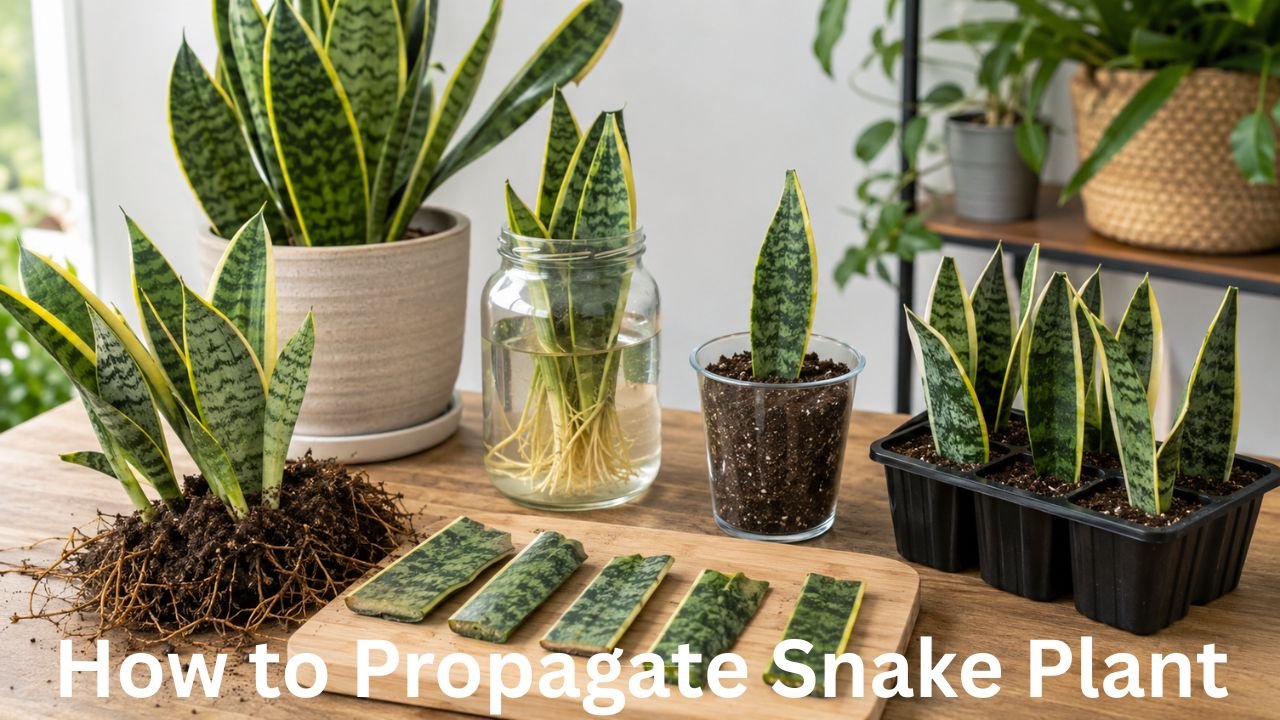
Snake plants are among the easiest houseplants to grow, and learning how to propagate snake plant varieties is a simple way to turn one healthy plant into several. Their upright leaves, attractive patterns, and ability to tolerate periods of neglect make them especially popular with beginners.
Propagation does not require expensive equipment or complicated gardening skills. Depending on the type of snake plant you have, you can create new plants from leaf cuttings, division, or offsets that naturally develop around the mother plant.
The key is patience. Snake plants generally grow slowly, so new roots may take time to develop. With the right technique, suitable growing conditions, and careful watering, you can successfully produce healthy new plants at home.
What Does Snake Plant Propagation Mean?
Propagation is the process of creating a new plant from an existing one. With snake plants, this can be done in several ways.
Some methods involve separating naturally growing baby plants from the parent, while others involve using a section of a mature leaf to produce roots and new growth.
The most suitable method depends on the plant you have and the result you want.
Common propagation methods include:
- Propagating snake plants by division
- Growing new plants from offsets or pups
- Propagating snake plants from leaf cuttings in water
- Propagating leaf cuttings directly in soil
Division and offsets are usually the easiest options because the new plant already has a developing root system or growing point. Leaf propagation can also work well, but it generally requires more patience.
Best Time to Propagate a Snake Plant
Snake plants can potentially be propagated throughout the year when grown indoors. However, the warmer and brighter months are generally more favorable because active growth makes it easier for cuttings and divided plants to establish themselves.
Spring and summer are particularly convenient for propagation.
If your home receives good indirect light and temperatures remain relatively stable, you can attempt propagation outside the traditional growing season. The important thing is to avoid placing fresh cuttings in cold, dark, or excessively wet conditions.
Propagate Snake Plant by Division
Division is one of the most reliable ways to propagate a mature snake plant.
This technique involves removing the plant from its container and separating the root system into smaller sections. Each section should have healthy roots and enough leaves to continue growing independently.
Step 1: Remove the Plant Carefully
Watering the plant a day or two before division can make the process easier, although the soil should not be soaking wet.
Gently remove the snake plant from its pot. Brush away some loose soil so you can see where the roots and individual plant sections connect.
Step 2: Identify Natural Sections
Look for separate clusters of leaves connected to their own roots or rhizomes. These natural divisions are the best candidates for separation.
Avoid cutting randomly through the plant. The goal is to create sections that have enough roots and foliage to survive on their own.
Step 3: Separate the Sections
Use clean, sharp scissors or a suitable gardening knife if the roots or rhizomes are tightly connected.
Separate the sections carefully. If a section comes away naturally with roots attached, avoid unnecessary cutting.
Step 4: Repot the New Plants
Place each section into a pot containing a well-draining growing medium.
The new container should not be dramatically larger than the root system. An oversized pot can hold excess moisture around the roots, which increases the risk of rot.
After planting, allow the plants time to settle before establishing a normal watering routine.
Propagate Snake Plant From Offsets or Pups
Another excellent method is growing snake plants from offsets. These small plants, often called pups, develop around the base of a mature plant.
When an offset has developed its own roots, it can usually be separated from the mother plant.
How to Remove a Snake Plant Pup
First, take the plant out of its pot or carefully expose the soil around the pup. Find the connection between the pup and the parent plant.
Using a clean cutting tool, separate the pup while keeping as much of its root system intact as possible.
Plant the pup in a small container filled with a loose, well-draining mix.
This method is particularly useful because the young plant has already begun developing naturally. Compared with leaf propagation, it can provide a more predictable way to produce a new plant.
Propagate Snake Plant From Leaf Cuttings
Leaf propagation is another popular technique, especially when you want to experiment with several cuttings from one mature leaf.
Start by choosing a healthy, undamaged leaf. Avoid leaves that are soft, severely damaged, or showing signs of disease.
Cut the leaf into sections several inches long. It is important to keep track of which end was originally closest to the roots. Planting the sections upside down can prevent successful growth.
Allow the cut pieces to dry for a short period so the cut surfaces can form a protective callus.
Afterward, place the cuttings into a suitable growing medium with the correct end facing downward.
Do not bury them too deeply. Only the lower portion needs to make contact with the growing medium.
Can You Propagate Snake Plant in Water?
Yes, snake plant leaf cuttings can be rooted in water.
This method is appealing because you can watch roots develop. However, water propagation is not necessarily faster or better than rooting directly in soil.
To try water propagation:
- Select a healthy snake plant leaf.
- Cut it into sections if desired.
- Allow the cut surfaces to dry.
- Place the bottom portion of a cutting into clean water.
- Keep the cutting in bright, indirect light.
- Change the water regularly.
- Wait for roots and eventually new growth to develop.
- Transfer the rooted cutting to well-draining soil when it has established sufficiently.
The most important detail is orientation. If a leaf cutting is placed upside down, it may fail to produce a new plant even if it remains healthy-looking for some time.

Soil Propagation vs. Water Propagation
Both methods can work, but each has advantages and disadvantages.
| Propagation Method | Main Advantage | Main Challenge | Best For |
|---|---|---|---|
| Division | Fast and reliable | Requires a mature plant | Established snake plants |
| Offsets | Naturally produces rooted plants | Requires existing pups | Beginners |
| Leaf in soil | Simple and inexpensive | Root development is hidden | Patient growers |
| Leaf in water | Roots are visible | Water must be maintained | Beginners who want to monitor roots |
For most beginners, division or rooted offsets are the easiest choices. Leaf propagation is useful when you want to multiply a plant from a single healthy leaf.
The Best Soil for Snake Plant Propagation
Snake plants prefer a growing medium that drains quickly. Propagation cuttings are especially vulnerable to excessive moisture because they may not yet have an established root system.
A suitable mix should allow water to move through the container instead of remaining around the cutting for long periods.
A commercial cactus or succulent mix can be a convenient option. You can also improve a standard potting mix by adding materials that increase drainage and airflow.
The container must have drainage holes. A decorative pot without drainage can trap water and create problems for developing roots.
How Much Water Do New Snake Plant Cuttings Need?
One of the biggest mistakes beginners make is watering propagation material too frequently.
Snake plants store moisture in their leaves and underground structures, so they generally tolerate dry conditions better than constantly wet soil.
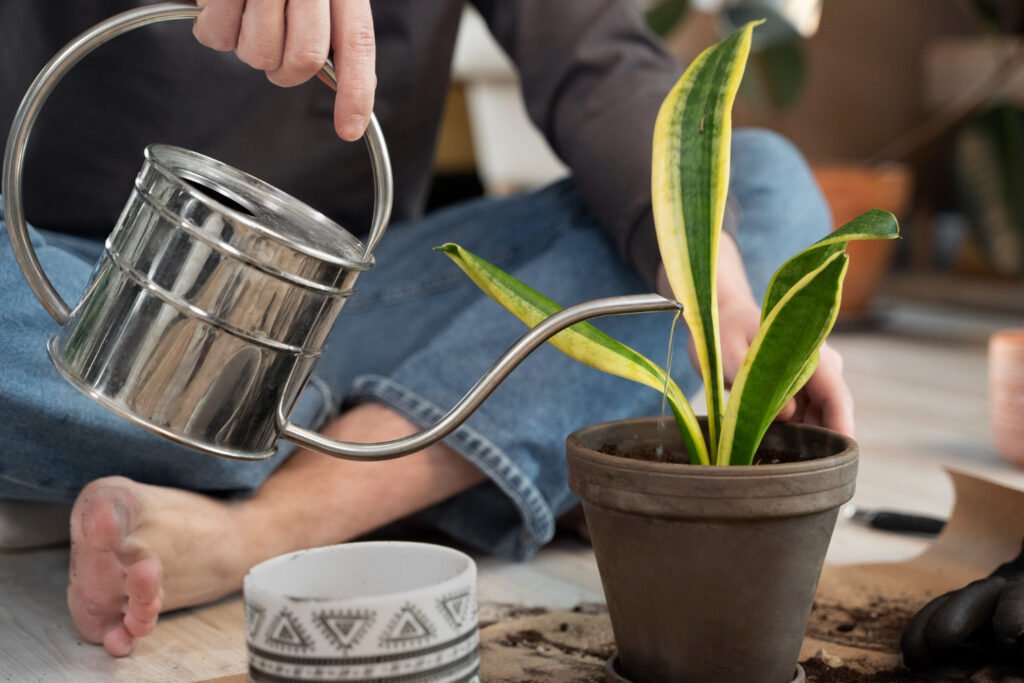
For soil propagation, keep the medium lightly moist when appropriate, but avoid making it soggy. The exact watering schedule depends on temperature, humidity, container size, soil composition, and light.
Always check the growing medium before adding more water.
If the soil remains wet for an extended period, improve drainage and reduce watering rather than simply waiting for the plant to recover.
Light Requirements During Propagation
Fresh snake plant cuttings benefit from bright, indirect light.
A location near a bright window can work well, provided the cutting is protected from intense direct afternoon sunlight. Excessive sunlight can cause leaf damage, while very low light may slow root development.
The ideal environment is stable rather than extreme.
Try to avoid repeatedly moving newly propagated plants from one location to another. Consistent conditions can make the establishment process easier.
Common Snake Plant Propagation Problems
Propagation does not always work on the first attempt. Understanding common problems can help you improve your results.
Leaf Cuttings Rotting
Rot is often associated with excessive moisture. If a cutting is constantly wet, bacteria and fungi can cause the tissue to deteriorate.
Use a well-draining medium, a container with drainage holes, and avoid unnecessary watering.
Cuttings Becoming Soft
A soft or mushy cutting may indicate rot or tissue damage. Healthy propagation material should remain firm.
Remove severely damaged portions and reassess the moisture and drainage conditions.
No Roots Appearing
Snake plants are naturally slow growers. A lack of visible roots does not necessarily mean propagation has failed.
Give the cutting adequate light and appropriate moisture while allowing sufficient time for development.
New Growth Is Taking Too Long
Root development often comes before obvious leaf growth. A cutting may be establishing underground even when nothing seems to be happening above the soil.
Patience is an important part of snake plant propagation.
How Long Does Snake Plant Propagation Take?
There is no single timeline that applies to every snake plant cutting.
Division and rooted offsets can begin growing more quickly because they already have established structures. Leaf cuttings can take considerably longer to produce a recognizable new plant.
Several factors affect the process:
- Temperature
- Light levels
- Moisture
- Soil drainage
- Cutting health
- Plant variety
- Time of year
- Overall growing conditions
Instead of checking for new roots every few days, give the plant consistent care and monitor it occasionally.
Tips for Successful Snake Plant Propagation
If you want better results, keep the process simple.
- Always begin with healthy plant material.
- Use clean cutting tools.
- Choose containers with drainage holes.
- Avoid heavy, water-retaining soil.
- Give cuttings bright, indirect light.
- Do not overwater.
- Keep newly propagated plants in a stable environment.
- Be patient with slow root development.
- Remove rotten or damaged material promptly.
- Label different varieties if you are propagating several snake plants.
One of the biggest advantages of snake plants is that they do not require constant attention. In many cases, excessive care can actually create more problems than beneficial care.
Frequently Asked Questions
1. What is the easiest way to propagate a snake plant?
Division or separating rooted offsets is generally the easiest method. These techniques use naturally established sections of the plant and can be more predictable than leaf cuttings.
2. Can you propagate a snake plant from just one leaf?
Yes. A healthy snake plant leaf can be cut into sections and propagated in water or soil. However, leaf propagation requires patience and may take longer than division.
3. Should snake plant cuttings dry before planting?
Allowing freshly cut leaf sections to dry can help the cut surface form a callus. This can be particularly useful before placing the cutting into a moist growing medium.
4. Why is my snake plant cutting turning mushy?
A mushy cutting is commonly associated with excess moisture, poor drainage, or damaged plant tissue. Remove affected material and make sure the remaining cutting is placed in an appropriate, well-draining environment.
5. Can snake plants grow roots in water?
Yes, snake plant leaf cuttings can develop roots in water. Once a healthy root system has developed, the cutting can be moved into a suitable soil mix.
6. How long does it take to propagate a snake plant?
The timeline varies considerably. Offsets and divisions can establish relatively quickly, while leaf cuttings may take much longer. Warm temperatures, good indirect light, and proper moisture can support the process.
Final Thoughts
Learning how to propagate snake plant is a rewarding project for both new and experienced plant owners. You do not need specialized equipment or an elaborate setup. With a healthy parent plant, clean tools, good drainage, and patience, you can produce new plants using several different techniques.
For beginners, starting with a rooted offset or division is usually the simplest approach. If you want to experiment, leaf propagation offers another interesting way to multiply your collection.
The most important rule is to avoid overwatering. Snake plants are naturally adapted to relatively dry conditions, and newly propagated pieces can be especially sensitive to excessive moisture.
Give your cuttings time, provide stable growing conditions, and resist the temptation to interfere constantly. With proper care, a single established snake plant can eventually become the starting point for a much larger indoor collection
Also Read: TheHomeTrotters Trisha: Exploring Home Inspiration, Travel, and Practical Living



One thought on “How to Propagate Snake Plant: Easy Methods for Growing New Plants”