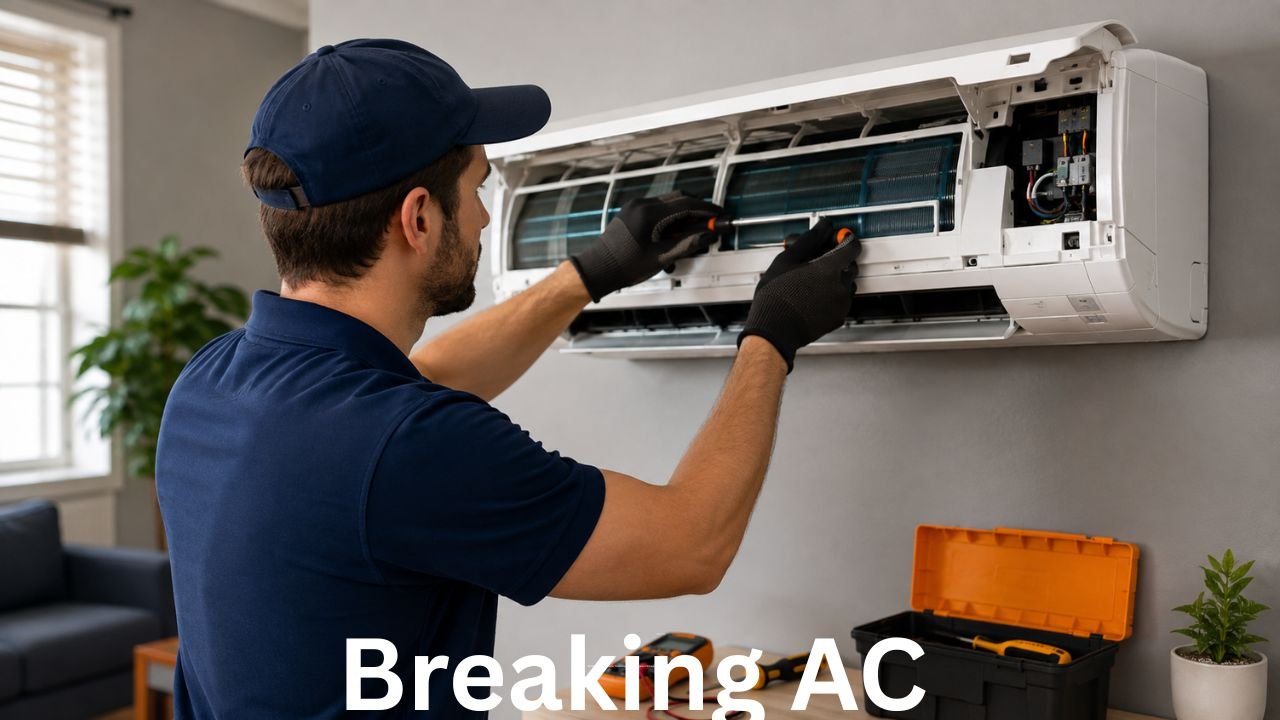
An air conditioner can become an essential part of everyday life, especially when temperatures rise and indoor spaces become uncomfortable. But when your breaking AC starts making strange sounds, blowing warm air, leaking water, or switching off unexpectedly, it can quickly become a frustrating problem.
Many air conditioner issues begin with small warning signs. A weak airflow or unusual noise may seem harmless at first, but ignoring these symptoms can sometimes turn a minor maintenance issue into a more expensive repair.
The good news is that not every AC problem requires immediate replacement. In many situations, understanding the symptoms can help you identify what may be wrong and decide whether simple maintenance, professional repair, or replacement is the better option.
This guide explains the most common signs of a breaking AC, possible causes, basic troubleshooting steps, maintenance practices, and situations where professional assistance is necessary.
What Does “Breaking AC” Mean?
The phrase breaking AC generally refers to an air conditioning system that is malfunctioning, losing performance, or showing signs that a component may be failing.
An AC system contains several important parts that must work together. These include the compressor, condenser, evaporator coil, blower fan, refrigerant system, electrical components, filters, and thermostat.
When one of these components develops a problem, the entire system can be affected.
A breaking AC may show symptoms such as:
- Warm or insufficiently cool air
- Weak airflow from the vents
- Unusual rattling or buzzing sounds
- Water leaking around the indoor unit
- Frequent short cycling
- Unpleasant smells
- Higher electricity consumption
- The system refusing to start
- Ice forming on the indoor unit or refrigerant lines
Recognizing these signs early can help prevent further damage.
Common Signs Your AC May Be Breaking
Not every unusual AC behavior means the system is about to fail completely. However, certain symptoms deserve attention.
1. The AC Is Blowing Warm Air
One of the clearest warning signs is an air conditioner that runs but fails to produce cool air.
Several issues can cause this problem. A dirty air filter can restrict airflow, while low refrigerant, a faulty compressor, a thermostat problem, or an issue with the outdoor unit may also be responsible.
Before assuming the worst, check whether the thermostat is set correctly and whether the filter is excessively dirty.
If the problem continues, professional diagnosis may be necessary.
2. Weak Airflow
If cool air is coming from the vents but the airflow is noticeably weaker than usual, the system may be struggling.
A clogged filter is one of the simplest possibilities. However, blocked ducts, a malfunctioning blower fan, frozen coils, or other mechanical problems can also reduce airflow.
Weak airflow should not be ignored because an AC that struggles to circulate air may operate for longer periods and consume more electricity.
3. Strange Noises
Air conditioners normally produce some operating sounds, but sudden changes should attract attention.
Depending on the sound, the possible cause can vary.
| AC Sound | Possible Cause | What It May Indicate |
|---|---|---|
| Rattling | Loose component or debris | Mechanical issue |
| Buzzing | Electrical or motor problem | Component requiring inspection |
| Grinding | Worn moving part | Possible motor damage |
| Hissing | Refrigerant or pressure issue | Professional inspection recommended |
| Clicking repeatedly | Electrical or control issue | Starting or control problem |
| Screeching | Belt, motor, or bearing issue | Possible component wear |
A new or increasingly loud sound is usually more important than a sound the unit has always made.
4. Water or Refrigerant Leaks
Water around an indoor AC unit can indicate a clogged condensate drain, frozen evaporator coil, or drainage problem.
However, not every liquid around an AC is simply water.
Refrigerant leaks are a different issue and require professional attention. Refrigerant systems operate under pressure, so attempting to repair or recharge the system without appropriate knowledge and equipment can be dangerous.
If you notice unexplained liquid, switch off the system if necessary and arrange an inspection.
5. Frequent On-and-Off Cycling
An air conditioner that repeatedly turns on and off over short periods may have a problem known as short cycling.
Possible causes include:
- Incorrect thermostat settings
- A dirty filter
- Poor airflow
- Oversized equipment
- Refrigerant problems
- Electrical or control issues
Short cycling can place additional stress on the system and prevent your home from reaching a comfortable temperature.
Why Is an AC Breaking Down?
There is rarely one universal reason why an air conditioner fails. Different symptoms can point toward different problems.
Dirty or Neglected Filters
Air filters collect dust, hair, and other particles. When they become heavily clogged, airflow can be restricted.
Restricted airflow can affect comfort and place additional strain on the system.
Regular filter inspection is one of the simplest ways to support normal AC operation.
Refrigerant Problems
Refrigerant is important for the cooling process. If the system has a leak or an incorrect refrigerant charge, cooling performance can suffer.
A refrigerant issue is not simply a matter of adding more refrigerant. A qualified technician should identify the underlying problem and handle the refrigerant appropriately.
Electrical Problems
Air conditioners depend on electrical components such as capacitors, contactors, wiring, controls, and motors.
Electrical problems can cause symptoms ranging from intermittent operation to complete failure.
Because electrical faults can present safety risks, homeowners should avoid opening electrical panels or attempting repairs without the proper expertise.
Dirty Outdoor Unit
The outdoor condenser unit needs adequate airflow to release heat.
Leaves, grass, dirt, and other debris can accumulate around the unit. If airflow becomes restricted, the AC may struggle to operate efficiently.
Keeping the surrounding area clear can help, although internal cleaning and servicing may require professional equipment.
Aging Components
Air conditioners contain mechanical and electrical parts that naturally wear over time.
A system that has been operating for many years may experience repeated problems as components reach the end of their useful service life.
At that point, repairing one part may solve the immediate problem without necessarily addressing the larger issue of an aging system.
What Should You Check When Your AC Stops Working?
If your AC suddenly stops cooling, there are a few basic checks you can perform without opening the equipment.
Check the Thermostat
Make sure the thermostat is:
- Set to cooling mode
- Set to a temperature below the current indoor temperature
- Powered properly
- Responding when you change the settings
A thermostat setting can sometimes be the simplest explanation for an apparent AC failure.
Inspect the Air Filter
Look at the filter and determine whether it is visibly dirty or blocked.
If your system uses a replaceable filter, follow the manufacturer’s instructions for replacing it.
Do not operate the system indefinitely with a heavily clogged filter.
Check the Electrical Supply
Make sure the relevant household electrical supply has not been interrupted.
If a breaker repeatedly trips when the AC starts, however, do not repeatedly reset it. Repeated tripping can indicate an electrical problem that needs professional attention.
Look at the Outdoor Unit
Check whether the outdoor unit is operating when the AC is supposed to be cooling.
Keep plants, leaves, boxes, and other objects away from the unit so that normal airflow is not unnecessarily restricted.
Do not remove electrical covers or attempt to repair internal components yourself.
When Should You Call an AC Professional?
Some basic checks are reasonable for homeowners, but more complicated problems should be handled by a qualified professional.
Contact an HVAC technician if:
- The AC repeatedly trips a breaker
- You suspect a refrigerant leak
- The compressor is not operating correctly
- The system makes grinding or severe mechanical noises
- Water continues to leak after basic checks
- The unit freezes repeatedly
- The AC produces a burning smell
- Cooling performance remains poor despite normal settings and airflow
- The system repeatedly breaks down
A professional can inspect the equipment, test components, identify the underlying cause, and explain the available repair options.
Repair or Replace a Breaking AC?
One of the biggest decisions homeowners face is whether to repair an existing system or replace it.
The right choice depends on several factors.
A repair may make sense when the system is relatively new, the problem is isolated, and the repair cost is reasonable.
Replacement may deserve consideration when the system is old, requires frequent repairs, has declining performance, or has a major component failure.
Consider these factors before making a decision:
- Age of the AC system
- Repair cost
- Frequency of previous breakdowns
- Energy efficiency
- Availability of replacement parts
- Overall cooling performance
- Expected future maintenance costs
A qualified technician can provide a more accurate recommendation after inspecting the system.
How to Prevent an AC From Breaking Down
Regular maintenance cannot prevent every possible failure, but it can reduce avoidable problems.
Keep Filters Clean
Check your filter regularly and replace or clean it according to the manufacturer’s recommendations.
The right maintenance schedule depends on the type of filter, indoor conditions, pets, dust levels, and system design.
Keep the Outdoor Area Clear
Maintain reasonable clearance around the outdoor unit.
Remove leaves and debris that could interfere with airflow, but avoid damaging the fins or internal components.
Schedule Professional Maintenance
A periodic professional inspection can identify developing issues before they become major failures.
Depending on the equipment and climate, maintenance may include checking electrical connections, airflow, coils, drainage, refrigerant-related components, and overall system performance.
Pay Attention to Changes
Your AC often gives warning signs before a major breakdown.
If cooling becomes weaker, energy use increases noticeably, or unusual sounds appear, investigate the issue rather than waiting for complete failure.
Common Mistakes to Avoid With a Breaking AC
When an air conditioner stops working, frustration can lead people to try quick fixes that create additional problems.
Avoid:
- Repeatedly resetting a tripped breaker
- Adding refrigerant without finding the cause of the problem
- Opening electrical components without proper training
- Ignoring burning smells
- Continuing to operate an AC that is leaking heavily
- Blocking or covering the outdoor unit
- Delaying obvious repairs for too long
A small maintenance issue can sometimes become significantly more expensive when ignored.
How to Make Your AC Last Longer
Proper care can help an air conditioning system provide reliable service for longer.
Simple habits can make a meaningful difference:
- Keep filters clean.
- Maintain clear airflow around outdoor equipment.
- Keep vents and returns unobstructed.
- Use the thermostat sensibly.
- Address unusual sounds early.
- Schedule appropriate professional maintenance.
- Avoid DIY electrical or refrigerant repairs.
- Keep records of major repairs and maintenance.
Good maintenance is not only about preventing breakdowns. It can also help maintain indoor comfort and efficient operation.
Frequently Asked Questions About Breaking AC
What are the first signs of a breaking AC?
Common early signs include weak cooling, reduced airflow, unusual noises, frequent cycling, water leaks, strange odors, and increasing energy consumption. A single symptom does not always mean the system is failing, but persistent changes deserve attention.
Can a dirty filter cause an AC to stop working?
Yes. A severely clogged filter can restrict airflow and contribute to poor cooling or other operating problems. Checking the filter is one of the easiest troubleshooting steps when an AC is not performing normally.
Should I repair or replace my breaking AC?
It depends on the system’s age, condition, repair cost, efficiency, and history of breakdowns. A relatively new system with an isolated problem may be worth repairing, while an older system with frequent expensive repairs may justify replacement.
Why is my AC running but not cooling?
Possible causes include restricted airflow, thermostat problems, refrigerant issues, dirty coils, outdoor-unit problems, or compressor-related faults. Start with basic checks such as the thermostat and filter. If the problem continues, have the system professionally inspected.
Is it safe to repair an AC myself?
Simple tasks such as checking the thermostat or replacing an accessible filter are generally suitable for homeowners. Electrical repairs, refrigerant work, compressor problems, and internal mechanical repairs should be handled by appropriately qualified professionals.
How can I prevent my AC from breaking down?
Regular filter maintenance, clear airflow around the outdoor unit, appropriate professional servicing, and early attention to unusual symptoms can help reduce avoidable breakdowns. No maintenance routine can eliminate every possible equipment failure, but preventative care can improve reliability.
Final Thoughts
A breaking AC does not always mean that the entire air conditioning system needs to be replaced. Many problems can be traced to maintenance issues, restricted airflow, electrical components, drainage problems, or individual parts that can be repaired.
The most important step is recognizing changes in your AC’s normal behavior.
Warm air, weak airflow, strange noises, leaks, frequent cycling, and unusual odors should not simply be ignored. Basic checks can sometimes identify a simple issue, while more complicated symptoms require professional attention.
Taking care of filters, maintaining clear airflow, scheduling appropriate servicing, and addressing warning signs early can help your air conditioner remain dependable.
When an AC eventually reaches the point where repairs are frequent or increasingly expensive, replacement may become the more practical long-term solution. The goal should always be to choose the option that provides reliable cooling, reasonable operating costs, and safe performance for your home.
Also Read: Home Hacks DecoradTech: Smart Ideas to Make Your Home More Functional and Stylish



One thought on “Breaking AC: Common Problems, Warning Signs, Causes, and What to Do”