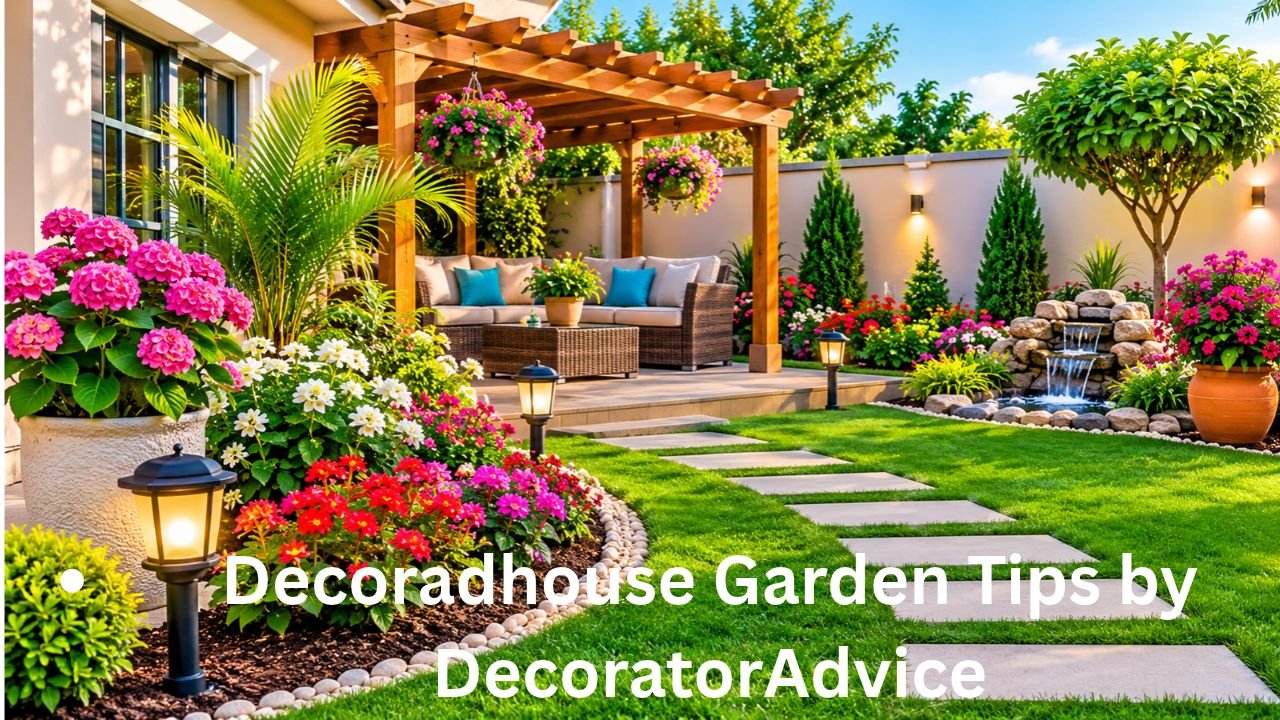
A beautiful garden can transform an ordinary outdoor space into a relaxing and welcoming environment. Whether you have a spacious backyard, a small patio, or a few containers on your balcony, the right gardening approach can help you create an outdoor area that looks attractive and stays healthy throughout the year.
Following decoradhouse garden tips by decoratoradvice can help homeowners understand how to plan garden layouts, choose suitable plants, improve soil quality, and maintain outdoor spaces without making gardening unnecessarily complicated. A successful garden does not always require expensive equipment or professional landscaping. Sometimes, a few thoughtful improvements can make a noticeable difference.
Many people start gardening with excitement but struggle to maintain their plants because they overlook important details such as sunlight, watering schedules, drainage, and seasonal changes. Understanding these basics before planting can save time, money, and effort.
In this guide, we will explore practical garden design ideas, plant care techniques, landscaping suggestions, and maintenance strategies to help you build an outdoor space that suits your home and lifestyle.
1. Start With a Proper Garden Layout
Before purchasing plants or gardening accessories, take some time to plan your outdoor space. A well-organized layout makes a garden easier to maintain and improves its overall appearance.
Start by observing the available area and identifying how much sunlight different sections receive throughout the day.
Consider the following factors:
- Available space: Measure your garden to understand how many plants and features it can accommodate.
- Sunlight exposure: Identify sunny, partially shaded, and fully shaded areas.
- Soil condition: Check whether the ground is sandy, clay-heavy, or rich in organic matter.
- Water access: Choose planting locations that are convenient to water.
- Walking paths: Leave enough room to move around without damaging plants.
You can divide your garden into different sections for flowers, vegetables, decorative plants, and seating areas.
For example, placing colorful flowers near the entrance creates an attractive first impression, while a small seating corner at the back provides a peaceful place to relax.
2. Choose Plants That Suit Your Climate
One of the most important gardening decisions is selecting plants that can grow comfortably in your local climate.
Not every plant performs well in every environment. Some varieties need strong sunlight, while others grow better in cooler temperatures or partially shaded locations.
Before buying plants, research their growing requirements.
| Plant type | Sunlight requirements | Maintenance level | Best use |
|---|---|---|---|
| Marigolds | Full sun | Low | Garden borders |
| Lavender | Full sun | Low to medium | Fragrance and landscaping |
| Aloe vera | Bright light | Low | Containers and decorative corners |
| Snake plant | Indirect light | Low | Indoor and shaded spaces |
| Basil | 6–8 hours of sunlight | Medium | Herb gardens |
| Petunias | Full sun | Medium | Flower beds and hanging baskets |
| Ferns | Partial to full shade | Medium | Shaded garden areas |
These plants have different growing requirements, so always check the specific variety before planting.
If you live in a region with hot summers, choose heat-tolerant varieties and provide extra protection to plants that struggle under intense afternoon sunlight.
3. Improve Soil Quality Before Planting
Healthy soil is the foundation of a successful garden. Even attractive plants may struggle if the soil does not provide enough nutrients, oxygen, and moisture.
Before planting, examine your soil’s texture and drainage.
If the soil becomes extremely hard when dry or holds too much water after rainfall, it may need improvement.
Here are some practical ways to improve garden soil:
- Add mature compost to increase organic matter.
- Mix in suitable organic material to improve soil structure.
- Remove stones, weeds, and unwanted debris.
- Avoid walking repeatedly over planting areas because compacted soil restricts root growth.
- Use mulch to help maintain soil moisture.
Compost made from suitable kitchen scraps, dry leaves, and garden waste can provide valuable organic matter.
However, avoid adding fresh manure directly around delicate plants because it may damage their roots.
A simple soil test can also help identify nutrient deficiencies and determine whether amendments are necessary.
4. Follow a Smart Watering Schedule
Watering is one of the most common challenges for beginner gardeners. Some people water their plants too frequently, while others allow the soil to become completely dry.
Both situations can affect plant health.
Instead of following a fixed watering schedule for every plant, check the soil before watering.
Push your finger approximately an inch into the soil. If it feels dry, many common garden plants may need water. If it still feels moist, wait and check again later.
A few useful watering practices include:
- Water near the base of plants instead of soaking their leaves.
- Water early in the morning when possible.
- Use a watering can for small containers.
- Consider drip irrigation for larger garden beds.
- Make sure containers have proper drainage holes.
- Adjust watering according to temperature, rainfall, and plant type.
During hot weather, plants in small containers may dry out faster than plants growing directly in the ground.
Remember that more water does not automatically mean healthier plants. Proper drainage is just as important as regular watering.
5. Add Color With a Balanced Flower Arrangement
Flowers can make an outdoor space look lively and welcoming. However, using too many different colors without a plan can make a garden feel visually crowded.
A balanced flower arrangement creates a more organized appearance.
Try combining two or three complementary colors rather than selecting every available shade.
For example:
- White and purple flowers create a calm, elegant appearance.
- Yellow and orange flowers bring warmth and energy.
- Pink and white combinations offer a soft, traditional look.
- Red flowers can create attractive focal points.
You can also arrange flowers according to their height.
Place taller plants toward the back of flower beds and shorter varieties near the front. This makes individual plants easier to see and gives the arrangement a layered appearance.
6. Make Small Gardens Look More Spacious
A small outdoor area can still become a beautiful garden with the right design choices.
The key is to use available space carefully rather than filling every corner with plants and decorations.
Here are some practical ideas:
Use vertical gardening: Install wall planters, hanging baskets, or vertical plant stands to grow plants without occupying valuable floor space.
Choose compact plants: Smaller plant varieties are easier to arrange in limited areas.
Create defined pathways: A narrow stone or gravel pathway can make a small garden appear more organized.
Use containers: Decorative pots allow you to move plants whenever you want to change the layout.
Keep the design simple: Avoid adding too many garden accessories or large decorative objects.
Vertical gardening is especially useful for apartments, balconies, and narrow outdoor spaces.
You can grow herbs, small flowering plants, and selected vegetables using wall-mounted containers or tiered shelves.
7. Use Mulching to Protect Garden Plants
Mulching is a simple gardening technique that provides several benefits.
It involves covering the soil surface with materials such as shredded leaves, bark, straw, or suitable organic compost.
A proper layer of mulch helps reduce moisture loss, control weeds, and protect plant roots from temperature changes.
Some common mulching materials include:
| Mulching material | Main benefit | Suitable areas |
|---|---|---|
| Wood chips | Helps retain moisture | Trees and shrubs |
| Straw | Reduces soil evaporation | Vegetable gardens |
| Dry leaves | Adds organic matter | Flower beds |
| Grass clippings | Provides organic material | Selected garden beds |
| Bark mulch | Creates a decorative finish | Landscaping areas |
When applying mulch, avoid piling it directly against plant stems or tree trunks. Excess moisture around stems can encourage rot and other problems.
A layer of approximately 2–3 inches is commonly suitable for many garden beds, depending on the material and plant requirements.
8. Add Decorative Features Without Overcrowding
A garden should be functional as well as attractive. Small decorative improvements can help create a more personalized outdoor environment.
However, too many decorations can make the space difficult to maintain.
Consider adding a few of these features:
- Garden stepping stones: Create a practical and attractive walking path.
- Outdoor lighting: Use suitable solar lights to highlight pathways and seating areas.
- Decorative containers: Choose pots that complement your home’s exterior.
- Small water features: A compact fountain can create a relaxing atmosphere.
- Garden benches: Provide a comfortable place to enjoy the outdoor environment.
- Natural borders: Use stones or low-growing plants to define different sections.
Try to select decorative elements that match your home’s architecture and existing outdoor colors.
For instance, wooden furniture works beautifully in natural garden settings, while simple stone features can complement modern landscaping.
9. Keep Weeds and Garden Pests Under Control
Weeds compete with garden plants for sunlight, nutrients, water, and growing space. If left unmanaged, they can quickly become difficult to control.
Regular inspection is one of the easiest ways to prevent weed problems.
Remove young weeds before they produce seeds. Hand-pulling is often effective when the soil is slightly moist.
You can also use mulch to reduce the amount of sunlight reaching weed seeds near the soil surface.
Garden pests require similar attention.
Check the underside of leaves, stems, and new growth for signs of insects or damage.
Some useful prevention methods include:
- Remove dead or damaged leaves.
- Avoid overcrowding plants.
- Keep garden tools clean.
- Encourage beneficial insects where appropriate.
- Use physical barriers to protect vulnerable plants.
- Identify pests before choosing a treatment.
Avoid applying pesticides without understanding which pest is affecting your plants. Some insects are beneficial and help maintain a healthy garden ecosystem.
10. Maintain Your Garden Throughout the Seasons
Gardening is not a one-time activity. Plants need different types of attention as weather conditions change.
A seasonal maintenance routine helps prevent common problems and keeps your outdoor space looking attractive.
| Season | Important gardening tasks |
|---|---|
| Spring | Prepare soil, plant seasonal flowers, add compost |
| Summer | Monitor moisture, water appropriately, provide shade where needed |
| Autumn | Remove fallen leaves, trim selected plants, prepare planting beds |
| Winter | Protect sensitive plants, reduce watering where appropriate, clean garden tools |
Your exact schedule will depend on your local climate. In warmer regions, summer heat protection may be more important than winter frost protection.
Regular observation is the best way to understand what your garden needs.
11. Create a Low-Maintenance Garden
Not everyone has enough time to spend several hours maintaining an outdoor space every week.
If you have a busy schedule, consider creating a low-maintenance garden that requires less frequent attention.
Start by selecting plants that naturally suit your climate and soil conditions.
Some useful ideas include:
- Grow hardy plants that tolerate local weather.
- Use perennial flowers where suitable.
- Install drip irrigation with an appropriate timer.
- Apply mulch to reduce weed growth.
- Group plants with similar watering requirements.
- Avoid complicated landscaping features.
- Choose durable outdoor furniture and materials.
Native plants can be particularly useful because many are naturally adapted to local environmental conditions.
A low-maintenance garden does not have to look plain. Combining evergreen plants, decorative stones, flowering varieties, and attractive containers can create a beautiful outdoor setting without requiring constant work.
12. Common Gardening Mistakes to Avoid
Even experienced gardeners sometimes make mistakes that affect plant growth.
Understanding these problems can help you avoid unnecessary expenses and frustration.
Overwatering: Too much moisture can damage roots and encourage fungal diseases. Always consider soil moisture and drainage.
Ignoring sunlight requirements: Plants placed in unsuitable lighting conditions may grow slowly or produce fewer flowers.
Planting too closely: Overcrowded plants compete for resources and reduce air circulation.
Using unsuitable soil: Different plants have different soil requirements, so avoid assuming one soil mixture works for everything.
Skipping regular maintenance: Small problems can become serious when weeds, dead leaves, and pests are ignored.
Buying plants without research: Check mature plant size, watering needs, and climate suitability before making a purchase.
Avoiding these mistakes can make gardening easier and help your plants remain healthy for longer.
Frequently Asked Questions (FAQs)
1. What are the best Decoradhouse garden tips by DecoratorAdvice for beginners?
Beginners should start with a simple garden layout, choose plants suitable for their climate, improve soil quality, and develop a consistent watering routine. Starting with a few easy-to-maintain plants is better than managing a large garden immediately.
2. How can I make my garden look beautiful on a small budget?
You can improve your garden using affordable containers, recycled planters, homemade compost, simple stepping stones, and seasonal flowers. Rearranging existing plants can also create a fresh appearance without requiring expensive landscaping.
3. Which plants are easiest to maintain in a home garden?
Some relatively easy-to-maintain choices include aloe vera, snake plants, marigolds, and suitable native plant varieties. However, their care requirements still depend on sunlight, temperature, soil, and watering conditions.
4. How often should I water my garden plants?
There is no single watering schedule that works for every plant. Check soil moisture regularly and consider the weather, container size, drainage, and plant variety before watering.
5. How can I prevent weeds from growing in my garden?
Regularly remove weeds before they mature, use suitable mulch to cover exposed soil, and avoid leaving unnecessary bare areas in planting beds. Consistent maintenance makes weed control much easier.
6. What is the best way to create a low-maintenance outdoor garden?
Choose climate-appropriate plants, group varieties with similar watering needs, use mulch, and consider drip irrigation. Simple layouts with durable materials also reduce the amount of regular maintenance required.
Final Thoughts
Creating a beautiful and healthy outdoor space does not require a large budget or professional landscaping experience. With thoughtful planning, suitable plant selection, healthy soil, and regular maintenance, almost any outdoor area can become an enjoyable garden.
These decoradhouse garden tips by decoratoradvice highlight practical ways to improve garden appearance while supporting healthy plant growth. From choosing the right flowers to creating small-space layouts and controlling weeds, each step can contribute to a better gardening experience.
Start with a few manageable improvements instead of trying to change everything at once. Pay attention to how your plants respond to their environment, adjust your routine when necessary, and gradually introduce new features.
With patience and consistent care, your garden can become a beautiful extension of your home and a peaceful place to enjoy throughout the year.
Also Read: Garden Tips Decoradhouse: Simple Ways to Create a Beautiful and Healthy Garden

One thought on “Decoradhouse Garden Tips by DecoratorAdvice: Simple Ways to Create a Beautiful and Healthy Garden”