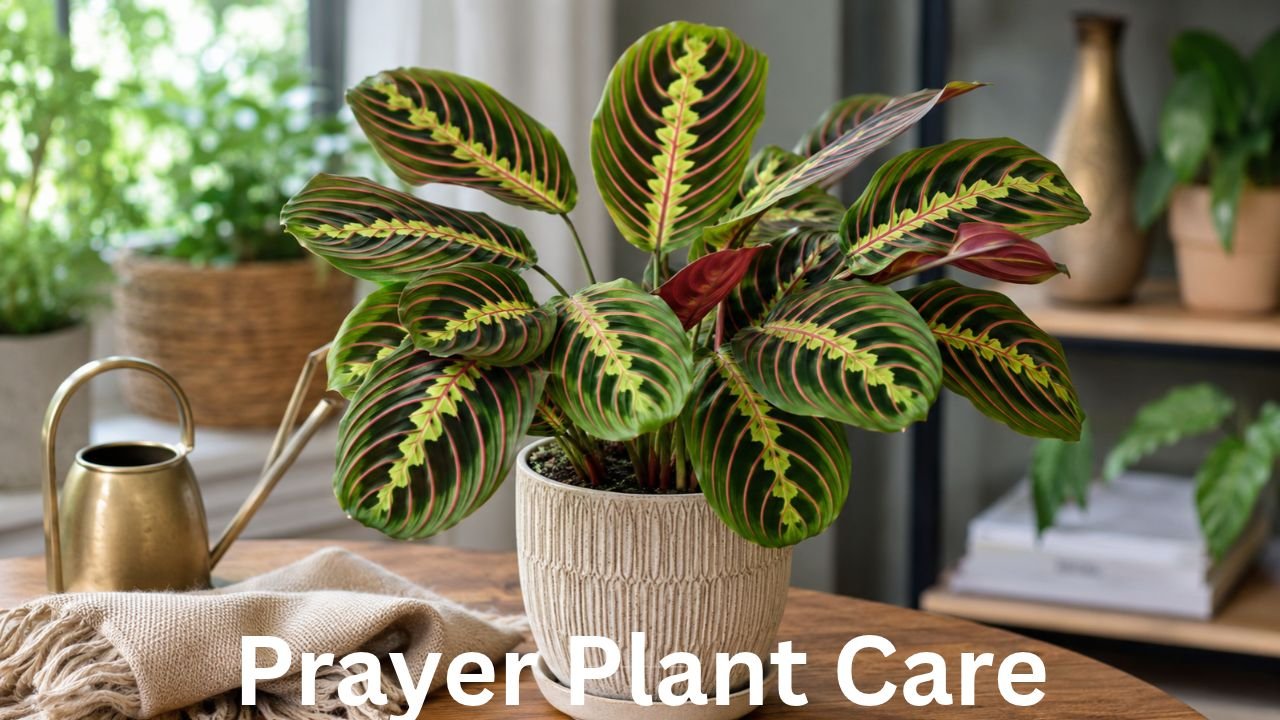
Prayer plants are popular houseplants because of their colorful foliage, interesting leaf patterns, and fascinating daily movement. Their leaves often fold upward at night, resembling hands coming together in prayer, which is where the plant gets its common name.
Although prayer plants can be a little more particular than some beginner-friendly houseplants, they are not difficult to grow when their basic needs are understood. The right balance of light, moisture, humidity, temperature, and soil can help your plant produce healthy leaves and steady new growth.
This complete guide to prayer plant care explains how to create the right indoor environment, how often to water your plant, what type of soil to use, and how to deal with common problems such as brown leaf edges, curling leaves, yellow foliage, and pests.
Understanding the Prayer Plant
Prayer plant is a common name used for several plants in the Marantaceae family, particularly plants in the Maranta genus. One of the best-known varieties is Maranta leuconeura, which is appreciated for its beautifully patterned leaves.
The foliage can feature shades of green, red, pink, purple, and cream depending on the variety. Its leaves also respond to changes in light and darkness.
During the evening, the leaves may move upward, while they spread out again during the day. This natural movement is called nyctinasty.
Prayer plants are native to warm, humid regions of Central and South America. Because of this background, they generally prefer conditions that resemble a tropical forest rather than a dry indoor environment.
Prayer Plant Care Requirements at a Glance
Before getting into the details, it helps to understand the plant’s basic requirements.
| Care Requirement | Ideal Condition |
|---|---|
| Light | Bright, indirect light |
| Water | Evenly moist but not soggy |
| Humidity | Medium to high humidity |
| Temperature | Warm and stable |
| Soil | Moisture-retentive but well-draining |
| Fertilizer | Balanced houseplant fertilizer during active growth |
| Pot | Container with drainage holes |
| Repotting | Usually every 1–2 years or when root-bound |
| Growth habit | Low-growing and spreading |
These conditions provide a useful starting point, but your plant may need small adjustments depending on your home’s temperature, humidity, and available light.
Choosing the Right Light
Light is one of the most important parts of successful prayer plant care.
Prayer plants naturally grow beneath taller vegetation, so they are accustomed to filtered light rather than intense direct sunshine.
A location with bright, indirect light is usually ideal.
An east-facing window can work particularly well because it often provides gentle morning sunlight. If your only option is a brighter south- or west-facing window, place the plant farther away from the glass or use a sheer curtain to soften the sunlight.
Too much direct sun can cause:
- Faded leaf colors
- Brown or scorched patches
- Crispy leaf edges
- Leaf curling
On the other hand, very low light can slow growth and make the plant appear less vibrant.
If the leaves remain healthy but growth is extremely slow, consider moving the plant closer to a source of indirect light.
How to Water a Prayer Plant
Watering is another major factor in keeping prayer plants healthy.
These plants generally prefer consistently moist soil, but they do not like sitting in water. The goal is to avoid both extremes: completely dry soil and waterlogged roots.
Before watering, check the top layer of soil with your finger. If the surface feels slightly dry, it is usually time to water.
When watering, soak the soil thoroughly until excess water drains from the bottom of the container. Empty any water that collects in the saucer rather than allowing the pot to sit in it.
Should You Use Tap Water?
Prayer plants can sometimes be sensitive to minerals and chemicals found in certain tap-water supplies. If your plant repeatedly develops brown leaf edges despite otherwise good care, water quality may be worth considering.
Depending on your local water supply, you can try:
- Filtered water
- Rainwater
- Distilled water
There is no universal watering schedule because indoor conditions vary. Temperature, humidity, pot size, soil composition, and light levels all affect how quickly the soil dries.
Maintaining Proper Humidity
Humidity is particularly important for prayer plants.
Dry indoor air can cause leaf tips and edges to turn brown or crispy. This is especially common during periods when indoor heating or air conditioning reduces humidity.
A humidifier is one of the most reliable ways to increase humidity around houseplants. Another option is to group several humidity-loving plants together, which can create a slightly more humid microenvironment.
A pebble tray may also help provide some local moisture, although its effect is usually more limited than that of a humidifier.
Avoid placing the plant directly beside a heater, radiator, or strong air-conditioning vent. Sudden changes in temperature and very dry air can stress the foliage.
Choosing the Best Soil
Prayer plants need soil that holds enough moisture while still allowing excess water to escape.
A heavy, compacted soil can remain wet for too long and reduce airflow around the roots. Extremely fast-draining soil, meanwhile, may dry out before the plant gets enough moisture.
A good indoor potting mix can be improved with materials such as perlite and organic matter to create a balance between moisture retention and drainage.
The ideal mix should:
- Hold some moisture
- Drain excess water efficiently
- Remain loose rather than becoming compacted
- Allow air to reach the roots
Always use a container with drainage holes. Good soil cannot compensate for a pot that traps excess water.

The Right Temperature for Prayer Plants
Prayer plants prefer warm, stable conditions.
A comfortable indoor environment is generally suitable, provided the plant is protected from cold drafts and sudden temperature changes.
Keep your prayer plant away from:
- Drafty windows during cold weather
- Exterior doors that are frequently opened
- Heating vents
- Air-conditioning vents
- Very cold rooms
Cold temperatures can slow growth and may damage tropical foliage.
Stable conditions are often more important than trying to maintain an exact temperature every day.
Fertilizing Prayer Plants
Prayer plants benefit from regular feeding during their active growing period.
A balanced liquid houseplant fertilizer can be diluted according to the product’s instructions and applied periodically during active growth. Avoid applying concentrated fertilizer directly to dry soil because this can potentially damage the roots.
During periods of slower growth, especially when light levels are lower, the plant usually needs less fertilizer.
Signs that may indicate fertilization problems include unusually weak growth or a buildup of fertilizer salts around the soil surface.
When in doubt, it is generally better to under-fertilize than to over-fertilize.
Pruning and Grooming
Prayer plants do not usually require heavy pruning, but occasional grooming can keep them looking attractive.
Remove yellow, severely damaged, or dead leaves using clean scissors. Cutting away unhealthy foliage allows the plant to focus its energy on healthy growth and improves its overall appearance.
If your plant becomes too large or develops long, uneven growth, you can trim selected stems to encourage a fuller appearance.
Always use clean tools when pruning. This reduces the risk of spreading potential diseases between plants.
Repotting a Prayer Plant
Prayer plants do not necessarily need frequent repotting.
Consider repotting when:
- Roots are emerging from the drainage holes
- Water passes through the pot unusually quickly
- Growth has slowed despite proper care
- The soil has become compacted or degraded
- The plant has clearly outgrown its container
Choose a pot only slightly larger than the current one. Moving a small plant into a very large container can leave a large volume of wet soil around the roots after watering.
Spring or early summer is often a convenient time to repot because the plant may be entering a period of active growth.
Common Prayer Plant Problems
Even with good care, prayer plants can occasionally develop problems. The appearance of the leaves often provides clues about what is happening.
Brown Leaf Edges
Brown edges are among the most common complaints.
Possible causes include:
- Low humidity
- Water-quality issues
- Inconsistent watering
- Excessive fertilizer
- Too much direct sunlight
Rather than changing everything at once, check the plant’s environment and make gradual adjustments.
Yellow Leaves
An occasional older yellow leaf is not necessarily a serious problem. However, widespread yellowing can indicate an issue with watering or root conditions.
Overwatering, poor drainage, and prolonged wet soil can place stress on the roots.
Check the soil before watering again and make sure the container drains freely.
Curling Leaves
Prayer plant leaves can curl when the plant is stressed.
Dry soil, low humidity, excessive sunlight, temperature fluctuations, or other environmental factors can contribute to curling.
Check moisture levels first, then examine the plant’s light and humidity conditions.
Faded Leaves
If the beautiful patterns on your prayer plant appear less intense, excessive sunlight may be a possible cause.
Move the plant away from strong direct rays while keeping it in a bright location.
Dealing With Common Pests
Prayer plants can occasionally attract houseplant pests, particularly when plants are stressed or indoor conditions are unfavorable.
Common pests include spider mites, mealybugs, and aphids.
Inspect both the upper and lower surfaces of leaves regularly. Early detection makes pest management much easier.
If you notice pests, isolate the affected plant from nearby houseplants and address the infestation using an appropriate houseplant pest-control method.
Regularly checking your plants is one of the simplest preventive habits you can develop.
How to Make Your Prayer Plant Bushier
Prayer plants naturally spread and can develop a fuller appearance with good growing conditions.
To encourage attractive growth:
- Provide adequate indirect light.
- Keep the soil appropriately moist.
- Maintain good humidity.
- Remove damaged leaves.
- Prune excessively long or weak stems when necessary.
- Feed appropriately during active growth.
Avoid aggressive pruning all at once. Small, selective cuts are usually enough to maintain the plant’s shape.

Is a Prayer Plant Safe Around Pets?
Many people choose prayer plants because they are commonly regarded as pet-friendly houseplants. However, individual plants and pets can vary, and pets should not be encouraged to chew on houseplants.
If you have curious cats or dogs, keeping plants in a location where they cannot repeatedly nibble on them is a sensible precaution.
Frequently Asked Questions About Prayer Plant Care
How often should I water a prayer plant?
There is no single schedule that works for every home. Check the soil regularly and water when the upper portion begins to dry while keeping the root zone from becoming completely dry for extended periods.
Why are my prayer plant leaves turning brown?
Brown edges can be caused by low humidity, inconsistent watering, mineral buildup, excessive fertilizer, or too much direct sunlight. Check the plant’s environment before deciding on a solution.
Does a prayer plant need direct sunlight?
No. Prayer plants generally perform best in bright, indirect light. Strong direct sunlight can damage or fade their attractive foliage.
How do I increase humidity for a prayer plant?
A room humidifier is one of the most effective options. Grouping plants together can also help create a more humid local environment. Keeping the plant away from heating and cooling vents is equally important.
Why are my prayer plant leaves curling?
Curling can be a response to several forms of stress, including dry soil, low humidity, strong sunlight, cold drafts, or sudden environmental changes. Check moisture, light, temperature, and humidity.
When should I repot my prayer plant?
Repot when the plant becomes noticeably root-bound, the soil has deteriorated, or water management becomes difficult. A new pot should generally be only slightly larger than the previous container.
Final Thoughts
Successful prayer plant care is mostly about consistency. These tropical houseplants appreciate bright indirect light, evenly moist soil, good drainage, warm temperatures, and higher humidity.
You do not need a complicated routine to keep a prayer plant healthy. Pay attention to its leaves, check the soil before watering, protect it from harsh sunlight and drafts, and make gradual adjustments when something looks wrong.
With the right environment and a little patience, a prayer plant can become a beautiful and distinctive addition to your indoor plant collection. Its patterned foliage and fascinating daily leaf movement make the extra attention well worth it.
Also Read: How to Remove Red Wine From Clothes: Easy Methods That Actually Work



One thought on “Prayer Plant Care: A Complete Guide to Growing Healthy, Beautiful Prayer Plants”