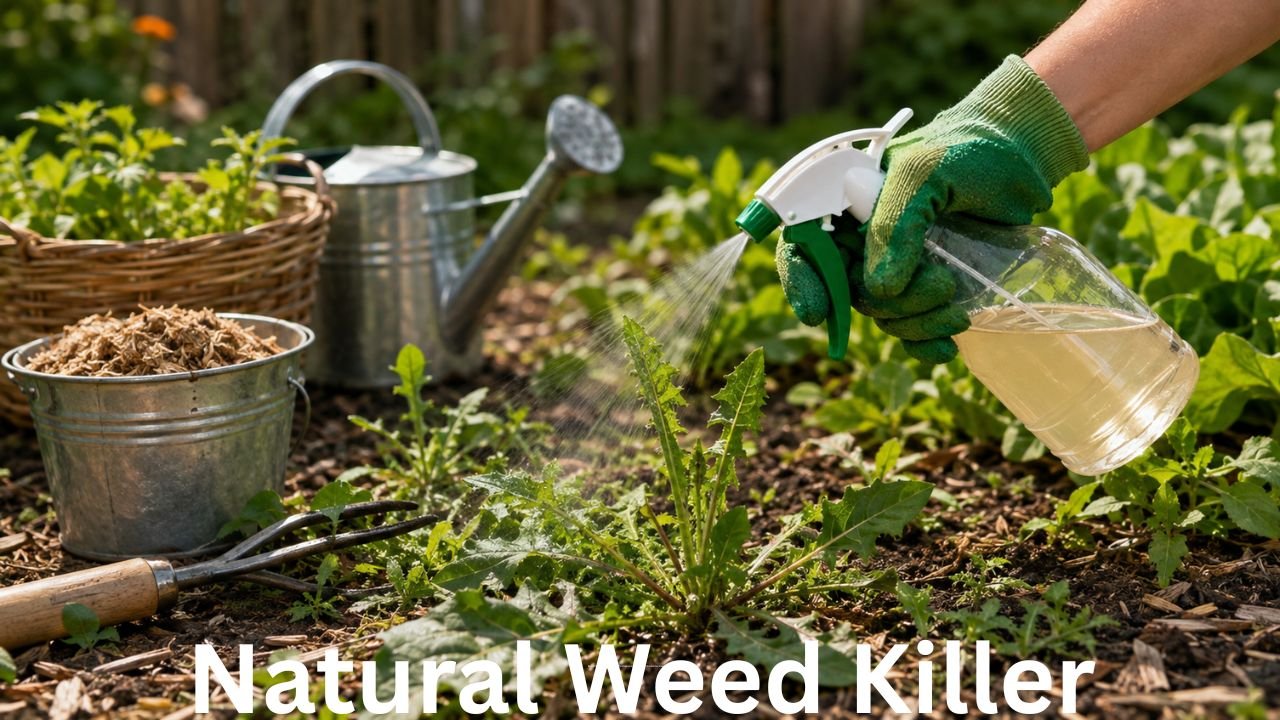
Weeds can quickly turn a healthy-looking garden into a constant maintenance project. They compete with vegetables, flowers, grass, and other plants for sunlight, water, nutrients, and space. While chemical herbicides can provide quick results, many homeowners prefer a natural weed killer when they want a simpler approach to garden maintenance.
Natural weed control does not necessarily mean there is one magical ingredient that eliminates every weed permanently. Instead, successful weed management usually comes from combining several methods, including hand removal, mulching, boiling water, vinegar-based solutions, and prevention.
The right approach depends on where the weeds are growing, how established they are, and whether desirable plants are nearby. With a little patience and consistency, you can reduce weeds considerably without relying heavily on conventional chemical herbicides.
What Is a Natural Weed Killer?
A natural weed killer is a substance or method used to control unwanted plants using ingredients or techniques that are generally considered more natural than conventional synthetic herbicides.
Common approaches include:
- Vinegar-based weed treatments
- Boiling water
- Salt in carefully controlled situations
- Corn gluten meal for certain preventative applications
- Mulch and ground covers
- Manual weed removal
- Smothering weeds with cardboard or landscape materials
- Flame weeding where appropriate
However, “natural” does not automatically mean harmless. Some natural substances can damage desirable plants, harm soil organisms, or make an area difficult to grow in if they are used incorrectly.
For that reason, application technique matters just as much as the ingredient itself.
Why Do Gardeners Choose Natural Weed Control?
There are several reasons homeowners look for alternatives to conventional weed killers.
One major reason is the desire to reduce the number of synthetic chemicals used around gardens, lawns, patios, and other outdoor areas.
Some gardeners also want to protect beneficial insects and avoid unnecessary exposure of pets or children to recently treated areas. Others simply prefer inexpensive ingredients that may already be available at home.
Natural approaches can also fit well into organic-style gardening practices when used appropriately.
That said, natural weed control often requires more frequent applications or physical effort. It is best viewed as part of an overall weed-management strategy rather than a single permanent solution.
Popular Natural Weed Killer Methods
Different weed-control techniques work in different situations. Understanding their strengths and limitations can help you choose the most suitable method.
Vinegar-Based Solutions
Vinegar is one of the most commonly discussed household options for controlling weeds.
Acetic acid can damage plant tissue when it comes into contact with leaves. This makes vinegar particularly useful for small, young weeds growing in cracks, pathways, gravel areas, and other locations where you do not want vegetation.
The important limitation is that vinegar generally works through contact. It may damage the visible portion of a weed without completely killing deep or established roots.
Repeated growth can therefore occur.
Vinegar can also damage desirable plants. Avoid spraying it on grass, flowers, vegetables, shrubs, or other plants you want to keep.
Boiling Water
Boiling water is one of the simplest weed-control methods.
Pouring very hot water directly onto a weed can damage its leaves, stems, and roots. This method can be particularly convenient for weeds growing between paving stones, along pathways, or in other areas where nearby plants are not desirable.
However, boiling water does not distinguish between weeds and wanted plants. Anything it contacts can be damaged.
Use caution when handling boiling water and keep children and pets away from the area during application.
Salt
Salt has historically been used to suppress vegetation because excessive salt can interfere with a plant’s ability to absorb water.
However, salt requires considerable caution.
Once it enters the soil, it can remain there and affect future plant growth. It may also move into surrounding areas with rain or irrigation.
For these reasons, salt is generally a poor choice for garden beds or locations where you eventually want healthy plants to grow.
If vegetation needs to be controlled in a place where soil health is not important, other methods may still be preferable because they are easier to manage.
Mulching
Mulch is not technically a weed killer in the same way as a contact herbicide, but it is one of the most useful natural weed-control tools available to gardeners.
A suitable layer of organic mulch can block sunlight from reaching weed seeds and young plants. It can also help retain soil moisture and improve soil conditions as organic materials break down.
Common mulch materials include:
- Shredded leaves
- Straw
- Wood chips
- Compost
- Grass clippings
- Bark mulch
Mulch works best when applied properly and maintained over time. If the layer becomes too thin, weeds may begin emerging through it.
Cardboard and Sheet Mulching
Sheet mulching can be especially useful when dealing with an area covered in persistent vegetation.
A layer of plain cardboard can block sunlight and gradually weaken weeds underneath. It can then be covered with compost and mulch to create a planting area.
This method is slower than spraying a contact treatment, but it can be useful when reclaiming sections of a garden or preparing a new bed.
Make sure cardboard is free from problematic coatings, excessive plastic, or materials you do not want in your garden.
Natural Weed Killer Methods Compared
| Method | Best Use | Main Advantage | Main Limitation |
|---|---|---|---|
| Vinegar-based treatment | Young weeds and cracks | Quick contact action | Can damage nearby plants |
| Boiling water | Paths and hard surfaces | Simple and inexpensive | Can harm any plant it touches |
| Mulch | Garden beds | Helps prevent new weeds | Requires maintenance |
| Cardboard sheet mulch | Larger garden areas | Blocks sunlight | Takes time to work |
| Hand pulling | Individual weeds | Precise control | Labor intensive |
| Salt | Limited non-growing areas | Suppresses vegetation | Can damage soil |
| Flame weeding | Suitable hardscape areas | Fast top growth control | Requires careful handling |
How to Make a Simple Natural Weed Killer
For small weeds growing in areas away from desirable plants, some gardeners use a vinegar-based spray.
A basic approach is to place household vinegar in a clean spray bottle and apply it directly to the leaves of unwanted plants on a dry day.
The goal is to wet the weed rather than creating unnecessary runoff.
Keep the spray away from desirable vegetation. Even a small amount of a strong contact treatment can injure flowers, vegetables, herbs, and grass.
It is also worth remembering that household vinegar is not necessarily equivalent to commercial herbicidal products containing higher concentrations of acetic acid. Stronger products can pose greater risks and should be handled strictly according to their labels.

How to Use Natural Weed Killer Safely
Natural weed control still requires responsible handling.
Before applying any treatment, consider what is growing around the target weed.
Follow these basic precautions:
- Do not spray directly onto desirable plants.
- Avoid windy conditions that can cause spray drift.
- Keep treatments away from ponds and waterways unless the product is specifically approved for that use.
- Wear appropriate protective equipment when the product label recommends it.
- Store ingredients safely and clearly label homemade mixtures.
- Keep children and pets away from treated areas until it is safe to return.
- Never mix household chemicals or cleaning products together.
- Read and follow the label when using a commercial weed-control product.
One of the biggest mistakes gardeners make is assuming that a natural ingredient can be used without limits. The safest approach is always to understand how a substance interacts with plants and soil before applying it.
When Natural Weed Killer Works Best
Timing can make a significant difference.
Young weeds are generally easier to control than large, mature plants with extensive root systems. Small weeds also require less effort to remove manually.
Dry weather can be useful for certain contact treatments because rain may dilute or wash away the treatment before it has enough time to affect the foliage.
For mulch and preventative methods, applying them before weeds become established can save considerable work later.
Regular observation is another important factor. Checking your garden once or twice a week allows you to remove young weeds before they develop large roots or produce seeds.
Natural Weed Prevention Is Better Than Constant Removal
The most effective weed strategy is often prevention.
Instead of repeatedly attacking mature weeds, focus on making your garden less favorable for them.
A healthy garden can naturally compete with unwanted vegetation when plants are properly spaced and cared for.
Helpful prevention techniques include:
Keep Bare Soil Covered
Bare soil provides opportunities for weed seeds to germinate. Mulch, ground covers, or closely spaced desirable plants can reduce those opportunities.
Pull Weeds Before They Produce Seeds
One mature weed can produce a large number of seeds. Removing weeds before flowering or seed production can reduce future problems.
Avoid Disturbing Soil Unnecessarily
Turning soil frequently can bring buried weed seeds closer to the surface, where light and moisture may encourage germination.
Improve Garden Plant Health
Plants that receive appropriate water, nutrients, sunlight, and growing space are better positioned to compete with unwanted vegetation.
Natural Weed Killer for Different Areas
Not every part of your property should be treated in the same way.
For vegetable gardens, prevention, mulch, hand pulling, and careful cultivation are usually more practical than broad spraying.
For flower beds, targeted removal and mulch can help protect ornamental plants.
For driveways and pavement cracks, contact methods such as boiling water may be convenient because desirable plants are less likely to be nearby.
For large overgrown areas, sheet mulching or repeated cutting may be more practical than treating every plant individually.
Choosing the method based on location can prevent accidental damage and reduce unnecessary work.

Common Mistakes to Avoid
Even simple weed-control methods can create problems when used incorrectly.
One common mistake is spraying a homemade mixture across an entire garden without considering desirable plants. Contact weed treatments do not know which plants are weeds.
Another mistake is relying entirely on one treatment. Some weeds return because their roots remain alive beneath the soil.
Using too much salt is another concern because it can create long-term soil problems.
Finally, gardeners sometimes expect immediate, permanent results. Weed management is usually an ongoing process. A few minutes of maintenance each week can be more effective than waiting until weeds become large and difficult to remove.
FAQs About Natural Weed Killer
What is the best natural weed killer?
There is no single best option for every situation. Vinegar-based contact treatments and boiling water can be useful for weeds in suitable areas, while mulch and manual removal are often better choices for garden beds.
Does vinegar permanently kill weeds?
Not necessarily. Vinegar can damage or kill exposed plant tissue, but established perennial weeds may regrow from their roots. Repeated treatment or physical removal may be necessary.
Is salt a safe natural weed killer?
Salt can suppress plants, but it can also accumulate in soil and interfere with future plant growth. Because of this, it should not be casually used in garden beds or around plants you want to grow later.
Can I use natural weed killer around vegetables?
Some natural methods can be used around vegetable gardens, but direct contact with vegetables or nearby desirable plants should be avoided. Mulching and hand removal are often safer choices for precise weed control.
How can I stop weeds from coming back?
Combine prevention and removal. Keep soil covered with appropriate mulch, remove weeds before they produce seeds, avoid unnecessary soil disturbance, and regularly inspect the garden for new growth.
Does boiling water kill weeds?
Boiling water can damage or kill plants it contacts. It is most suitable for areas such as pavement cracks or pathways where nearby desirable plants will not be affected.
Final Thoughts
Using a natural weed killer can be a practical part of maintaining a cleaner, healthier-looking outdoor space. However, effective weed management is rarely about finding one miracle ingredient.
The best results usually come from combining targeted weed removal with prevention. Mulch can reduce new growth, hand pulling provides precise control, and carefully selected contact treatments may help in areas where desirable plants are not present.
Most importantly, think about the location before choosing a method. A technique that works well on a driveway may be completely unsuitable for a vegetable garden.
With regular maintenance and the right combination of techniques, you can keep weeds under control while reducing your reliance on conventional chemical herbicides.
Also Read: Home Upgrade DecoradTech: Smart Ideas to Transform Your Home
One thought on “Natural Weed Killer: Effective Ways to Control Weeds Without Harsh Chemicals”